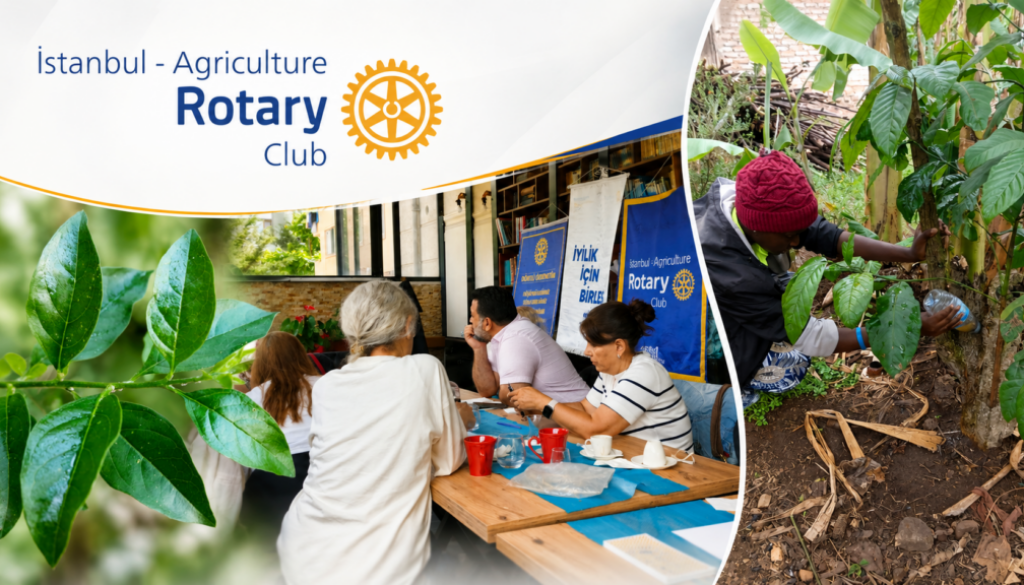
Cultivating a Greener Agriculture with the Istanbul Agriculture ROTARY Club, RID2420
Across Türkiye, Uganda and other farming regions, communities are confronting water scarcity, soil degradation and changing growing seasons. The Istanbul Agriculture ROTARY Club argues that resilient agriculture begins with healthy soil, locally appropriate solutions and long-term collaboration.
Introduction
Agriculture is never only about crops. It is also about water, soil, livelihoods, culture, technology and the relationships that enable communities to respond to change.
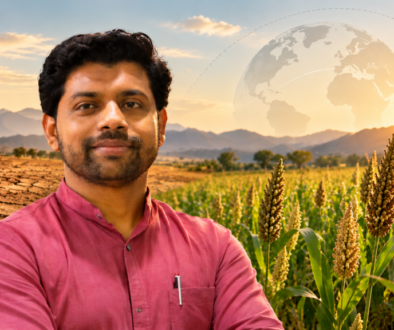
In his Earth Talks presentation, Turkish civil engineer and agricultural specialist Ali Gökçe Yaşar explored how these connections are shaping agriculture in Anatolia, the Mediterranean and beyond. Drawing on the work of the Istanbul Agricultural Rotary Club and its partners, he described a practical vision of farming that protects biodiversity while strengthening food security and rural economies.
Their central message was hopeful but demanding: sustainable agriculture cannot be delivered through a single technology or short-term grant. It requires communities to understand their local conditions, measure results, share knowledge and remain involved through complete growing and harvesting cycles.
Agriculture Begins with Place
Anatolia lies within one of the world’s historically significant agricultural regions. Its varied landforms, soils and microclimates have supported crop cultivation and animal husbandry for thousands of years.
Yaşar connected this agricultural diversity to the geological forces that formed the mountain belt stretching from southern Europe through Türkiye and toward the Himalayas. These landscapes create sharply different growing conditions over relatively short distances. A method that succeeds in one valley may be unsuitable in another.
Key Takeaways
- Healthy soil is the foundation of food security, biodiversity and resilient rural livelihoods.
- Agricultural solutions must reflect local climate, water, soil, crops and community needs.
- Regenerative practices can restore damaged soil while farms continue producing food.
- Data helps farmers measure results, anticipate change and improve future growing seasons.
- Long-term cooperation must continue through planting, harvest, processing and sales.
This is why agricultural projects must begin with regional circumstances rather than imported assumptions. Water availability, soil composition, seasonal temperatures, local crops and market demand all influence which solutions will work.
The same principle applies internationally. Türkiye experiences distinct seasons and generally one major annual harvest, while equatorial Uganda may support two production cycles without a winter period. Cooperation can transfer knowledge between regions, but each practice must be adapted to local climate and ecology.
Healthy Soil Supports Healthy Communities
Yaşar presented soil, food, people, technology, and international cooperation as interconnected pillars of sustainable agriculture. Of these, soil is the foundation.
Soils affected by intensive pesticide use, industrial residues or declining organic matter cannot always transition immediately to certified organic production. Regenerative agriculture can provide a practical pathway. The term describes farming practices intended to restore soil fertility, improve water retention and support biodiversity while continuing to produce food.
“Healthy soil sustains biodiversity and is the foundation of everything we do.” The Istanbul Agriculture ROTARY Club
This may include composting, reducing harmful chemical inputs, maintaining ground cover, and using locally produced biological preparations to manage pests.
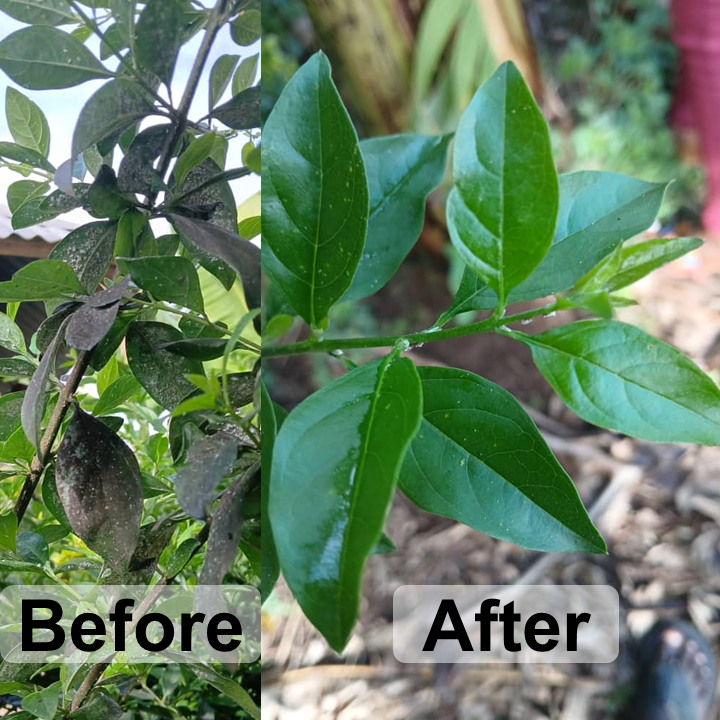
Yaşar described cooperation between agricultural Rotarians in Türkiye and the Kinoni Rotary Club in Uganda. Partners discussed plant protection methods using substances such as vinegar or garlic to repel insects rather than eliminate them indiscriminately. The objective was to protect crops while preserving beneficial organisms.
These experiences demonstrate an important distinction: agricultural success is not simply a larger harvest. It also includes healthier soil, safer food, stronger biodiversity, and farmers who can sustain their work economically.
Climate Resilience Requires Measurement and Adaptation
Early in his discussion of climate pressures, Yaşar emphasized the need to prepare before conditions become more severe. “We have to take precaution even earlier.”
Changing rainfall, rising temperatures and drought risks are already influencing farm decisions. Yaşar pointed to rainwater collection, efficient irrigation and controlled-environment systems such as hydroponics and aquaponics as possible responses. Hydroponics grows plants without soil, while aquaponics combines plant cultivation with fish production in a recirculating water system.
Technology, however, is valuable only when it responds to a real local need. Farmers need usable information about rainfall, soil condition, crop quality, yields and market performance. Consistent records can help communities evaluate one season and make better decisions for the next. “Technology should help us digitally monitor sites and establish databases.”
Measurement also allows project partners to define success more clearly. Useful indicators might include soil organic matter, compost use, pesticide reductions, the number of farmers trained, food produced, women and young people participating, and households gaining access to healthy food.
Data should not replace farmers’ experience. Instead, it can strengthen that knowledge, helping growers recognize emerging patterns that differ from the seasons their families have known for decades.
“Technology should help us monitor sites and prepare for future seasons.” The Istanbul Agriculture ROTARY Club
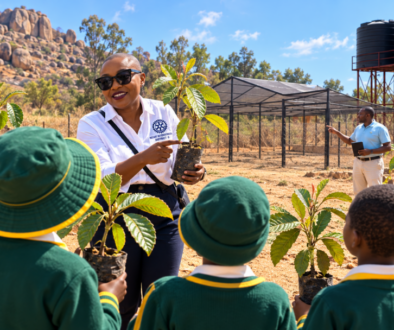
Training is equally important. School gardens, farmer workshops and community demonstrations can turn abstract sustainability goals into everyday skills. Children can learn composting and food production directly, while producers can compare methods and coordinate their actions.
Cooperation Must Last Beyond a Funding Cycle
Agricultural transformation takes time. A project cannot be judged only by whether equipment was delivered or a training event was completed. It must continue through planting, cultivation, harvesting, processing and sales. “Agriculture is not like having project funding and giving it away. Agriculture requires a term.”
Yaşar outlined a collaborative model in which interested groups first exchange information, identify stakeholders and funding partners, prepare documentation and secure district support. From there, projects require regular meetings, site visits, shared publications and ongoing evaluation.
“Agriculture requires time, from planting through harvest and income.” The Istanbul Agriculture ROTARY Club
Cooperatives can play an especially valuable role. By organizing collectively, smallholder farmers may gain access to equipment, technical advice, processing facilities and stronger markets that would be difficult to reach individually.
Women and young people should be central to this process. Yaşar highlighted women’s roles as producers, educators and holders of practical agricultural knowledge. Supporting them can strengthen entire households and help transfer skills to younger generations.
International partnerships are most successful when they do not impose standardized solutions. Their role is to connect professional knowledge with local experience, help communities obtain suitable resources and create systems that can continue after external support ends.
Practical Takeaways & Implications
Yaşar’s presentation offers a useful framework for Rotary clubs, nonprofits, educators and community leaders considering agricultural projects.
Begin with local evidence. Study soil, water, climate, existing crops and community priorities before selecting technologies or funding equipment. A highly advanced system is not automatically the most sustainable one.
Design projects around full agricultural cycles. Budgets and reporting schedules should recognize that farmers may need six months, a year or longer before outcomes can be evaluated.
Measure environmental and social results together. Crop yield matters, but so do soil health, biodiversity, farmer income, food quality, training and participation by women and young people.
Support knowledge exchange rather than one-way instruction. Farmers already possess valuable experience. Outside specialists can contribute most effectively by testing ideas with communities and adapting recommendations to local conditions.
Finally, make sustainable practices visible and accessible. Composting household and garden waste, collecting rainwater, creating school gardens and monitoring soil conditions are practical entry points. Individually, they may appear modest. Together, they can build the habits and knowledge needed for more resilient food systems.
The future of agriculture will not depend on one crop, country or institution. It will be cultivated through patient cooperation among people who understand that caring for soil also means caring for communities.
About This Earth Talk
Speaker: Ali Gökçe Yaşar is a civil engineer with a master’s degree in hydraulics and professional experience in irrigation, drainage, water structures, construction management, and technical marketing. He is also pursuing graduate studies in field crops at Ankara University and serves with the Istanbul Agricultural Rotary Club and the Rotary Fellowship for Agriculture and Farming.
Date presented: August 6, 2026
🎥 Watch on YouTube: Link
🎧 Listen as a Podcast: Link
📖 Read the Blog: Cultivating a Greener Agriculture
🌱 Learn more / Project links: Rotary Fellowship for Agriculture and Farming