Rising Tides, Rising to the Occasion: Rotary’s Climate Reckoning with Barry Rassin
At the largest event of Earth Talks Giving Season, former Rotary International President Barry Rassin brought the climate crisis home, connecting rising seas, stronger disasters, polluted water, and damaged ecosystems with something Rotary knows how to do: organize people to solve difficult problems.
For Barry Rassin, rising seas are not an abstraction on a chart. He can see the change from the road near his home in The Bahamas.
That firsthand perspective gave unusual weight to Rising Tides, Rising to the Occasion: Rotary’s Climate Reckoning, the featured presentation at the biggest event of Earth Talks Giving Season on October 1, 2026. Rassin challenged Rotarians to understand the scale of environmental change while refusing to stop at the problem. His larger message was about capacity: Rotary already has people, partnerships, grants, local knowledge, and experience responding when communities are in crisis.
Emcee Wade Nomura guided the international gathering and subsequent question-and-answer session, connecting Rassin’s message to the larger mission of the Earth Talks Foundation and Earth Network Rotary Club.
The result was not simply a presentation about climate change. It was a conversation about what a global service organization can do next.
Climate Change Becomes Real When It Reaches Home
Rassin began with water.
Across the world, he said, communities face shrinking or polluted lakes and rivers, drought, fires, rising seas, coastal flooding, and increasingly difficult questions about how people will live when the natural systems they depend upon change. He cited examples from the Aral Sea and Lake Chad to the Great Salt Lake, Ganges River, Pacific island nations, and low-lying coastal communities.
But the presentation became especially personal when he turned to The Bahamas.
Key Takeaways
- Rising seas turn climate science into an immediate human, economic, and public-health challenge.
- Rotary’s disaster experience offers a foundation for stronger climate resilience and recovery.
- Environmental projects can grow through grants, scientific expertise, business relationships, and community partnerships.
- Rotaractors, young Rotary service leaders, should help lead environmental programs, not simply serve as project volunteers.
- Local action becomes more powerful when Rotary’s global network connects people, knowledge, and resources.
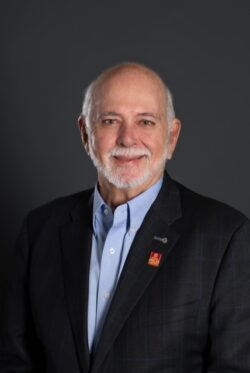
Rassin lives in a nation of hundreds of islands, much of it only slightly above sea level. On his regular drive into Nassau, he passes Saunders Beach, where boulders were placed years ago to protect the shoreline from erosion. During a recent king tide, he said, roughly 80 percent of those boulders were underwater.
For him, that made sea-level rise visible.
The consequences extend well beyond disappearing beaches. Rassin described saltwater contamination of freshwater supplies, coral damage from hotter ocean water, flooding, displacement, and the extraordinary vulnerability of island communities.
He also connected environmental change to human health and livelihoods. When freshwater becomes contaminated, reefs decline, fisheries suffer, or communities repeatedly flood, the environmental problem becomes a public-health, food-security, economic, and humanitarian problem as well.
Leadership Starts by Making the Problem Personal
Rassin brought an unusual combination of experience to the conversation. He served as President of Rotary International in 2018–2019, leading and motivating a global network of tens of thousands of Rotary and Rotaract clubs in more than 200 countries and geographical areas. He later served as Chair of The Rotary Foundation in 2023–2024, after previous service as a Rotary International director, Foundation trustee and vice-chair, and District 7020 governor.
His career outside Rotary adds another dimension. Rassin spent 38 years with Doctors Hospital Health System in Nassau, retiring as president after helping grow the organization from 11 employees to approximately 600. The hospital became the first in the region to receive international accreditation. He was also the first Fellow of the American College of Healthcare Executives in The Bahamas.
His humanitarian work includes helping found HANWASH, the Haiti National Water, Sanitation and Hygiene Strategy, an ambitious, long-term effort designed to expand access to safe water and sanitation across Haiti.
Those experiences matter because Rassin has seen both large institutions and devastated communities from the inside. He has managed organizations, mobilized volunteers, worked across borders, and participated in recovery after major disasters.
The environmental challenge, he argued, now requires Rotary to bring those same capabilities to another global problem.
Disaster Response Shows What Organized Service Can Accomplish
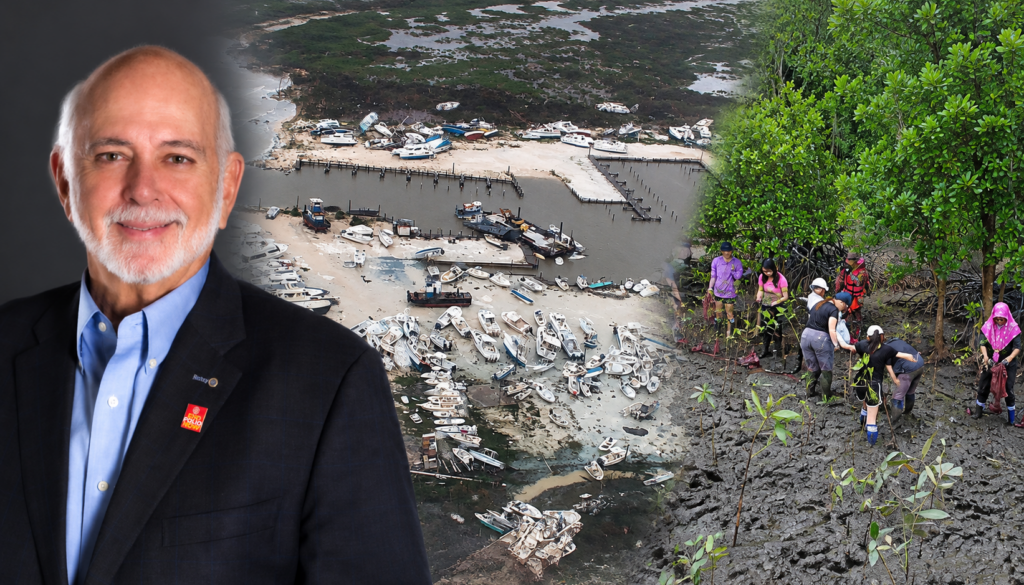
Few parts of Rassin’s presentation were more powerful than his account of Hurricane Dorian, which devastated parts of The Bahamas in 2019.
He described the enormous storm surge, the destruction in Abaco and Grand Bahama, and the human consequences behind disaster statistics. In one particularly painful story, a friend clung to a coconut tree during the storm while trying unsuccessfully to hold onto his wife as the water swept her away.
“Happening in our environment loses lives. It isn’t just about the destruction of the property. People are losing lives,” Rassin said.
The disaster also demonstrated what an international service network can do after catastrophe.
Rotary members mobilized assistance, sent supplies, helped provide emergency drinking water, supported schools and communities, and assisted with longer-term economic recovery. Rassin said Rotary has spent more than $7 million on post-Dorian work in Abaco and Freeport, while Rotarians in Florida helped send more than 250 tons of supplies.
In Freeport, Rotary-supported projects went beyond immediate relief. After boats were washed inland, Rotary helped fishermen repair vessels and obtain new engines so they could return to work, provide protein for residents, and begin rebuilding the local economy.
“That’s what Rotary does. We get together, we help each other,” Rassin said.
Recovery, he emphasized, also means recognizing psychological trauma. Food, water, shelter, and infrastructure are essential, but communities emerging from catastrophe may also need mental-health support for years afterward.
“That's what Rotary does. We get together; we help each other.” Barry Rassin
That experience offers an important lesson for climate resilience. Communities need emergency response, but they also need preparation, stronger systems, restored livelihoods, safe water, functioning schools, and partnerships capable of staying after international attention moves elsewhere.
Rotary Already Has Tools for Environmental Action
Rassin’s presentation did not end with disaster. It moved toward possibility.
Rotary officially recognizes supporting the environment as an area of focus, opening opportunities for clubs and districts to develop projects and seek global grants. Yet Rassin noted that environmental projects remain comparatively underused within that grant structure.
The opportunity, he suggested, is to connect Rotary’s existing strengths with environmental needs.
He pointed to mangrove restoration that can help protect coastlines and marine life. He described Rotary-supported work involving reefs, water systems, river cleanup, disaster response, and partnerships with scientists and environmental organizations.
One example captured his optimism particularly well. After hearing about the possibility of pumping colder deep-ocean water toward shallower reefs stressed by heat, Rassin contacted a Rotarian known for innovative thinking. Within a day, conversations with scientists had begun about whether the idea could be tested.
“I’ve always found when Rotary dreams about something, we make it happen,” Rassin said. “So I’m a dreamer.”
The point was not that every experimental idea will succeed. It was that Rotary can provide something environmental solutions often need: people willing to convene experts, test possibilities, raise resources, and translate an idea into a project.
“I've always found when Rotary dreams about something, we make it happen.” Barry Rassin
Rassin also stressed partnership. Governments, environmental organizations, universities, scientists, businesses, communities, Rotary districts, and clubs each bring different capabilities. During the Q&A, he encouraged Rotary districts and zones to engage companies rather than waiting for Rotary International to initiate every relationship.
“We talk to ourselves,” he observed, arguing that Rotary should talk much more with the corporate world about what can be accomplished together.
The Next Generation Should Lead, Not Just Help
The question-and-answer session broadened the conversation from projects to participation.
Rassin urged clubs to listen more closely to Rotaractors and other younger leaders who bring environmental knowledge, creativity, urgency, and different ways of thinking.
His point went beyond recruiting young people to carry out projects designed by others. He called for sharing leadership itself.
“I’d like to see every Rotary Club turn to their Rotaract Clubs and ask them and listen to them about what they think we should be doing for our environment,” Rassin said. “Let’s use our Rotaractors, absolutely. And not as workers, but as leaders.”
That shift could be consequential. Environmental challenges will unfold over decades, meaning many of the people who will live longest with decisions made today are precisely those who should have a meaningful role in shaping the response.
Rassin also encouraged clubs to recognize opportunities close to home, from pollinator protection and plastic reduction to partnerships with local industries and larger environmental projects. A club does not have to begin with a multimillion-dollar initiative. It can begin by understanding a problem, building expertise, finding partners, and then growing.
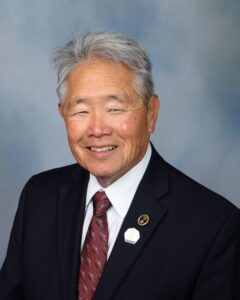
The same principle applies to Earth Talks itself: knowledge becomes more valuable when people connect it to action. During the event, Nomura highlighted efforts including pollinator habitats, plant-rich food choices, renewable energy, river cleanup, and projects designed to help communities adapt to climate change.
He also announced that Giving Season supporters had already brought the organization to 89 percent of its fundraising goal for the coming 12 months, helping sustain educational programming, connections, and practical environmental action.
Practical Takeaways & Implications
Rassin’s challenge to Rotary was ambitious, but it was not abstract.
Start locally. Clubs can identify an environmental problem their community actually experiences, whether that is water quality, plastics, habitat loss, pollinator decline, coastal resilience, waste, or disaster preparedness.
Then build partnerships. Rotary does not need to become the scientific expert on every issue. It can bring scientists, governments, businesses, nonprofits, young leaders, and communities to the same table, then use its organizational experience to help turn expertise into action.
Think beyond emergency relief. Disaster response remains essential, but resilience also means safe water, restored livelihoods, functioning schools, healthy ecosystems, mental-health support, and preparation before the next emergency arrives.
Use Rotary’s financial infrastructure. Environmental projects can make use of district and global grants, and successful local initiatives can sometimes grow into larger programs. Rassin’s experience with HANWASH demonstrates both the difficulty and potential of moving from a project measured in thousands of dollars to an initiative measured in millions.
Most importantly, widen the circle of leadership. Invite Rotaractors and young people to design and lead environmental programs rather than simply asking them to volunteer.
The climate challenge is enormous. Rassin’s message was that Rotary’s response can also grow.
That is the deeper meaning of rising to the occasion: not assuming one club, one donor, or one project can solve a planetary problem, but recognizing what becomes possible when millions of people act through trusted networks, shared knowledge, and sustained partnerships.
About This Earth Talk
Presenter: Barry Rassin, O.D., F.A.C.H.E., M.B.A., C.Dir.
Barry Rassin served as President of Rotary International in 2018–2019 and Chair of The Rotary Foundation in 2023–2024. A longtime member of the Rotary Club of East Nassau, he has served Rotary in numerous senior leadership roles. He retired as president of Doctors Hospital Health System in Nassau after a 38-year career and is a founder of HANWASH, the Haiti National Water, Sanitation and Hygiene Strategy. His humanitarian honors include The Rotary Foundation Distinguished Service Award and Rotary International’s Service Above Self Award.
Emcee: Wade Nomura
Wade Nomura is a Past District Governor, Rotary International President’s Representative, and Rotary Foundation Cadre leader. He has helped review more than 200 humanitarian projects and participated in more than 50 international Rotary missions. An experienced international speaker who has worked directly with Barry Rassin, Nomura brought his knowledge of Rotary service, humanitarian projects, and storytelling to his role as emcee for this special Giving Season event.
Date presented: October 1, 2026
🎥 Watch on YouTube: Link
🎧 Listen as a Podcast: Link
📖 Read the Blog: Link