
From Bees to Forests: Growing Solutions for People and Planet with Mario Figus and Rajendrakumar V Saraf
As pollinators decline and cities heat up, two grassroots projects show how restoring nature can also restore lives—inside prisons and beyond.
Introduction
Across the world, pollinators are disappearing, cities are overheating, and biodiversity is shrinking. Yet in two very different corners of the globe—an Italian prison in Sardinia and an open correctional facility in India—solutions are quietly taking root.
In this Earth Talk, environmental engineers Mario Figus and Rajendrakumar V. Saraf share how beekeeping and dense micro-forests can revive ecosystems while offering something equally powerful: purpose and opportunity for people often left behind. Their message is simple but compelling—when we rebuild nature, we can also rebuild lives.
Key Insights
- Pollinators as a Gateway to Restoration
Pollinators like bees are essential to food systems and biodiversity, yet their populations are declining due to habitat loss, pesticides, and climate change. Figus’s project tackles this crisis by creating pollinator gardens and beekeeping programs—starting in an unexpected place: prison grounds.
Inside a correctional facility near Cagliari, Italy, a once-unused strip of land has been transformed into a thriving pollinator habitat. Carefully selected for sunlight, wind protection, and biodiversity potential, the site now supports flowering plants and future beehives.
“Don’t be scared—bees can transform both ecosystems and lives.” Mario Figus
The project goes beyond conservation. It reconnects people with natural systems.
As Figus explains, “Don’t be scared”—a phrase that became the project’s name—captures both the fear of bees and the broader hesitation people feel toward change.
By reframing bees as allies rather than threats, the initiative opens the door to ecological awareness and hands-on learning.
- Beekeeping Behind Bars: Skills That Matter
The beekeeping program is as much about people as it is about pollinators. Inmates participate in a structured training course combining theory and practice—learning bee biology, hive management, and honey production.
Participants are carefully selected, often based on their proximity to release or their vulnerability. The goal is clear: equip them with skills they can use to reintegrate into society.
“Many times these courses… keep their mind busy and give them freedom within prison life,” Figus notes.
Key Takeaways
- Pollinator gardens and beekeeping restore biodiversity while teaching valuable life skills.
- Prison-based programs can support rehabilitation through environmental stewardship.
- Miyawaki forests grow 10× faster and are 30× denser than traditional planting.
- Dense urban forests improve air quality, cool cities, and capture carbon.
- Community partnerships make small-scale projects scalable and sustainable.
The program also builds confidence and responsibility. Inmates help construct hives in prison workshops, manage colonies, and eventually process honey in a purpose-built lab. Even small-scale production—starting with just five hives—creates a sense of ownership and achievement.
Today, over 300 inmates are involved in beekeeping projects across twelve prisons in Italy with three Rotary Clubs. Figus hopes that projects like this are replicated on a large scale.
The Eco Club Network and District 2080 are planning an in-person Rotary networking event to strengthen Rotary networks focused on environmental sustainability and connections, fostering broader collaboration among clubs and developing environmental projects on a larger scale, including major projects exceeding $2,000,000.
This is rehabilitation through nature: practical, dignified, and forward-looking. Figus adds, “I believe that if we combine our dreams and our ability to engage our fellow Rotarians, no challenge is insurmountable.”
- From Concrete to Canopy: The Power of Miyawaki Forests
While bees restore ecosystems at a micro level, Saraf’s work focuses on transforming entire landscapes using the Miyawaki method—a technique for growing dense, native forests in small urban spaces.
In a large prison complex in Maharashtra, India, a two-acre plot is being converted into a “mini forest” with remarkable characteristics:
- Up to 30 times denser than conventional plantations
- Growth rates up to 10 times faster
- Multiple vegetation layers, from ground cover to tall canopy
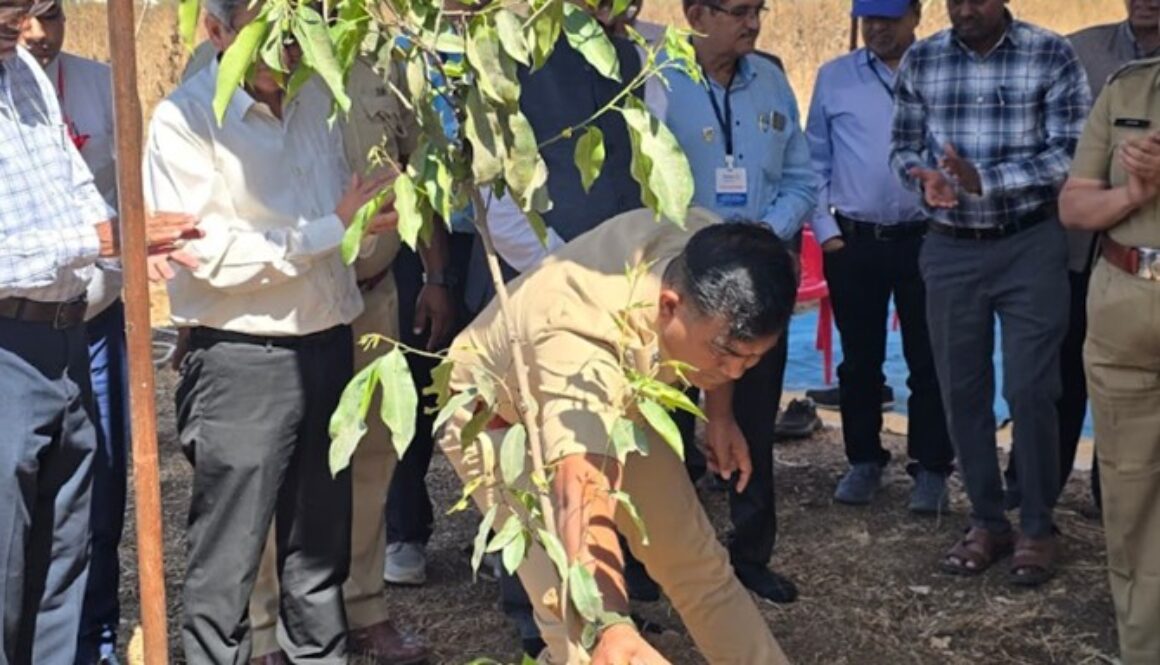
Dense forest project is being implemented on the land provided by Mr. Suhas Warke (IPS) Additional Director General of Police and Inspector General of Prisons and Correctional Services, Pune, Maharashtra. Rotary Club of Pune Tilak Road is executing the project handed over by Environment Avenue of RID 3131.
Unlike traditional tree planting, Miyawaki forests mimic natural ecosystems. Diverse species grow together, forming symbiotic relationships that strengthen resilience and reduce disease.
“The trees… have a symbiotic relationship. Their roots talk with each other,” Saraf explains.
This approach turns degraded or unused land into self-sustaining ecosystems within just a few years.
- Cooling Cities and Capturing Carbon
Urban areas are increasingly affected by the “heat island” effect, where concrete and asphalt trap heat, raising temperatures and worsening air quality.
“The trees have a symbiotic relationship. Their roots talk with each other.” Rtn Rajendrakumar V. Saraf
Dense micro-forests offer a powerful countermeasure. They:
- Absorb carbon dioxide more efficiently than sparse plantings
- Improve air quality by filtering pollutants
- Cool surrounding areas through shade and natural evaporation
- Enhance soil health and water retention
Saraf highlights another benefit: oxygen production. During crises like COVID-19, the importance of clean air became painfully clear. Projects like these provide localized, natural solutions.
The result is not just environmental improvement, but healthier, more livable urban spaces.
- Nature as Rehabilitation and Community Builder
Both projects share a deeper purpose: human transformation.
In India, inmates in an open prison actively plant and maintain the forest. Over time, they become stewards of the land, responsible for its growth and protection.
In Italy, beekeeping fosters patience, teamwork, and care—qualities that extend beyond prison walls.
When we restore nature, we create better environments—and better futures for people Rtn Rajendrakumar V. Saraf
These initiatives also build bridges between institutions and communities. Partnerships with Rotary clubs, environmental organizations, and local experts ensure long-term support and scalability.
The impact is both ecological and social. As Saraf notes, such spaces can become “very good… spots for enjoying life,” attracting visitors and reconnecting people with nature.
Practical Takeaways & Implications
These projects offer a blueprint for scalable, community-driven environmental solutions:
- Start small, think big
A few beehives or a small plot of land can spark meaningful change. Both projects begin modestly but are designed to grow. - Design for local conditions
From wind protection in Sardinia to soil analysis in India, success depends on adapting to local environments. - Integrate people into the solution
Training, participation, and ownership are key. When people are involved, projects become sustainable. - Combine environmental and social goals
Restoring ecosystems and supporting vulnerable populations are not separate challenges—they can be addressed together. - Build partnerships
Collaboration with experts, institutions, and community groups ensures technical quality and long-term viability.
Ultimately, these initiatives show that environmental action doesn’t require perfect conditions—just creativity, commitment, and collaboration.
About This Earth Talk
Speakers:
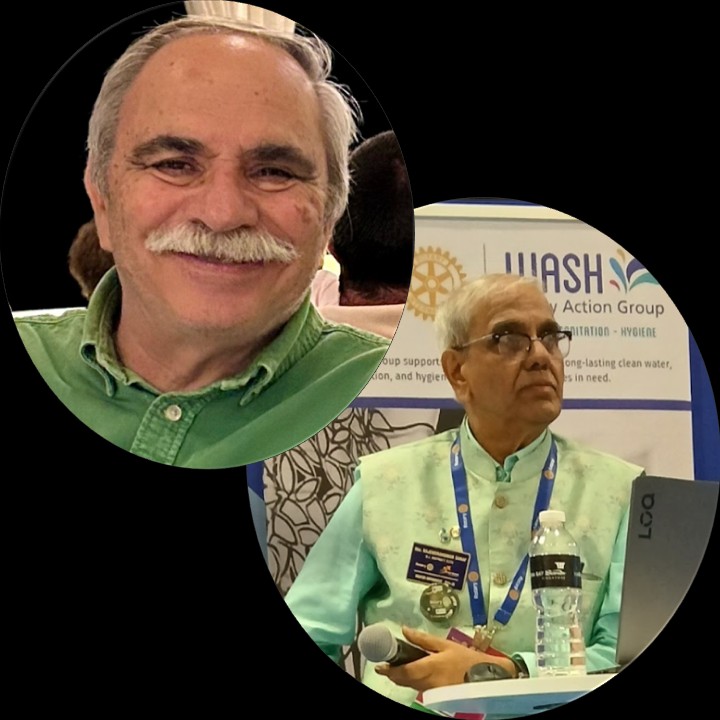
Mario Figus – Environmental engineer specializing in soil and groundwater remediation; Rotary sustainability leader since 2002.
Rajendrakumar V. Saraf – Environmental engineer with 55 years of experience; Rotary District Environment Chair with 11 patents.
Date Presented:
16 April 2026
Links:
📖 Read the Blog
🎥 Watch on YouTube
🎧 Listen as a Podcast






 Watch on
  Listen as a
  Read the