
Latest Talks

AI and the Ethics of the Earth: A Call to design AI that serves the whole ecosystem
 Watch on
  Listen as a
  Read the


Climate Action and Projects in the San Fracisco Bay Area
DeAnna Pursai will discuss impactful environmental projects and how ESRAG Big West is expanding a powerful network of supporters and sustainability initiatives
5 February 2026 · Thursday · 15:00 UTC
Due to a technical error, the recording from this session is unfortunately not available. If you are interested in the topic,
📖 Check out DeAnna’s presentation at her District Conference
🎥 Watch video DeAnna’s presentation to Rushton Hurley’s E-Club of Silicon Valley on YouTube
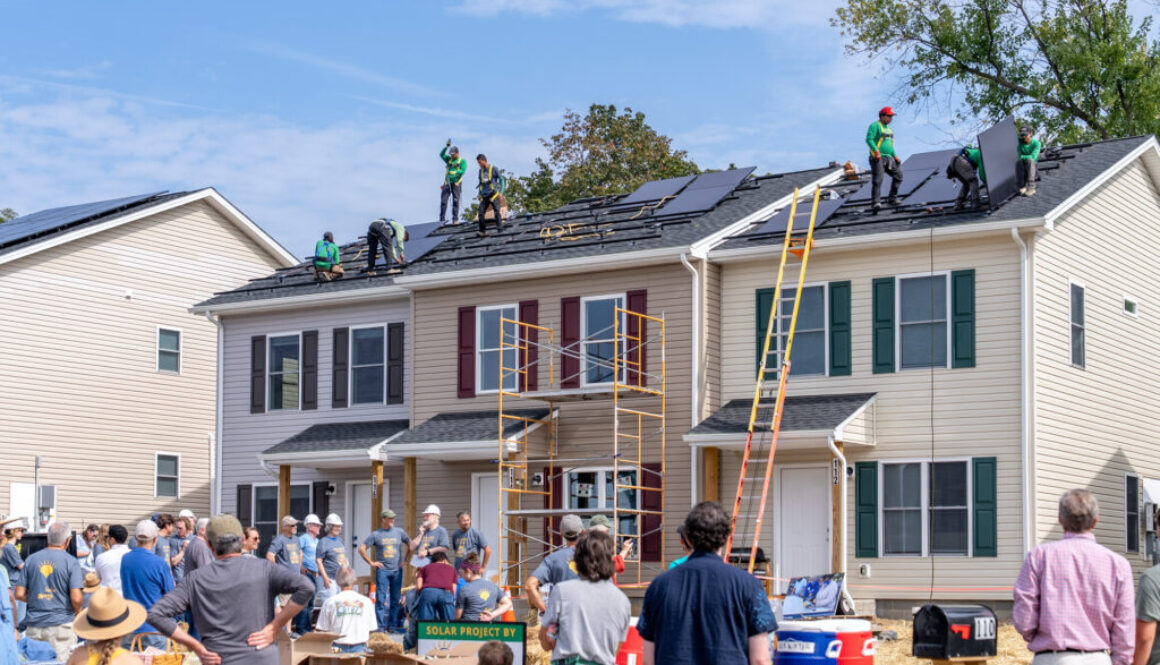
Habitat for Humanity National Solar Program
Jeff Heie will spotlight an ambitious national campaign bringing solar power to 10,000 Habitat for Humanity homes in five years—sharing its journey from a local Virginia pilot to a nationwide movement, plus updates and a bold vision to make solar standard in affordable housing.
12 February 2026 · Thursday · 15:00 UTC
Links:
📖 Read the Blog
🎥 Watch on YouTube
🎧 Listen as a Podcast
Conservation Awareness through Nest Boxes
Urban birds are losing nesting spaces as cities grow. Naturalist J. N. Prasad shows how simple, local nest boxes, fewer pesticides, and community action can help sparrows and songbirds survive—and return—to our neighborhoods.
Prasad is a veteran naturalist and birdwatcher with over 40 years of experience, Prasad has authored 50+ scientific papers, co-founded the Merlin Nature Club, and leads the Hakkigoodu nest-box initiative in India.
Watch on Youtube.
Listen on Spotify.
Key Insights
Not All Birds Build Their Own Homes
One of Prasad’s central lessons is that birds have very different nesting strategies. Some species, like woodpeckers and barbets, are “primary cavity nesters.” Each breeding season, they carve fresh holes into dead branches, creating safe spaces to raise their young.
But many other birds—called secondary cavity nesters—can’t make these holes themselves. They rely on abandoned cavities left behind by others. “Once those old trees and dead branches are removed for safety or aesthetics,” Prasad explained, “an entire chain of birds loses its homes.”
Urban landscaping, with its emphasis on neatness and risk reduction, often removes exactly the features birds need most.
Urbanization Has Changed the Rules
Prasad showed images of Bengaluru’s dramatic transformation from a garden city into a dense technology hub. Between 1975 and 2020, green spaces gave way to roads, buildings, and metro lines. With that shift came higher temperatures, fewer insects, and fewer nesting options.
“We now joke that we have only three seasons,” he said. “Hot, hotter, and hottest.”
This matters because young birds depend heavily on insects—especially soft-bodied caterpillars—for protein. Pesticide use and loss of native vegetation have sharply reduced insect populations, making it harder for birds to successfully raise chicks even when nesting sites are available.
“Birds don’t need luxury homes. They need the right space, in the right place, at the right time.” — J. N. Prasad
Key Takeaways
- Many urban birds depend on tree cavities lost to modern landscaping
- Nest boxes work best when designed for local species
- Sparrows decline due to habitat loss, insects, and nesting space
- Simple recycled materials can create effective bird homes
- Community-wide action matters more than isolated efforts

- Artificial Nest Boxes Can Help—If Done Right
One of the most practical parts of Prasad’s talk focused on nest boxes. When designed thoughtfully and placed correctly, artificial nest boxes can substitute for lost tree cavities in urban areas.
But he cautioned against blindly copying designs from other countries. “Many nest boxes sold online are made for birds in Europe or North America,” he said. “Our local birds don’t always accept them.”
Instead, Prasad promotes low-cost, locally adapted designs—often made from scrap wood, old clay pots, or even discarded shoeboxes. Orientation matters: boxes should be protected from direct sun and heavy rain, and entrance holes must be positioned to prevent chicks from falling out.
“Making a nest box is not hard,” he emphasized. “What matters is understanding who it’s for.”
“We removed dead trees for safety, but we also removed homes for dozens of species.” — J. N. Prasad
The Sparrow’s Decline Is a Warning Sign
Few birds symbolize urban nature better than the house sparrow. Once common in homes, markets, and bus stations, sparrows have vanished from many neighborhoods.
The reasons are interconnected: smooth modern buildings with no crevices, fewer insects due to pesticides, and lack of small shrubs for shelter. “People put up nest boxes and wonder why sparrows don’t come,” Prasad said. “If there are no sparrows nearby, they won’t magically appear.”
His solution is patience and scale. Supporting sparrows may require a chain of nesting sites across neighborhoods, combined with water sources, small plants, and reduced chemical use. “It can be a five-year effort,” he noted, “but it is possible to bring them back.”
Conservation Works Best When It’s Community-Led
Perhaps the most inspiring insight from Prasad’s work is how deeply it involves people—especially children. Through the Hakkigoodu (“bird home”) network, volunteers build, install, and monitor nest boxes while teaching others how to do the same.
Schools play a central role. Children learn by building simple boxes from reused materials and watching birds return. “When kids see a bird raise chicks in something they made,” Prasad said, “they never forget it.”
This approach doesn’t just help birds. It builds ecological literacy and a sense of shared responsibility for urban nature
“You can’t save sparrows alone. You need a neighborhood working together.” — J. N. Prasad — J. N. Prasad
Practical Takeaways & Implications
Prasad’s message is refreshingly practical: you don’t need to live next to a forest to help birds. You need awareness, restraint, and collaboration.
Start by observing what birds already live in your area. Different species have different needs, so one-size-fits-all solutions rarely work. Provide water—both for drinking and bathing—especially in hot climates. Grow native plants, even in small pots, to attract insects and offer shelter.
Avoid feeding birds processed human food. In tropical regions, natural food sources are usually sufficient if habitats are healthy. Instead, focus on restoring those habitats in small, local ways.
Most importantly, think beyond individual actions. Birds move across neighborhoods, not just backyards. Successful conservation in cities depends on networks—of nest boxes, of green patches, and of people willing to learn and share.
As Prasad reminded the audience, birds have survived since the age of dinosaurs. What they need now is space to adapt once again, with a little help from us.
About This Earth Talk
Speaker: J. N. Prasad
A veteran naturalist and birdwatcher with over 40 years of experience, Prasad has authored 50+ scientific papers, co-founded the Merlin Nature Club, and leads the Hakkigoodu nest-box initiative in India.
Date Presented: 8 January 2026
Links:
🎥 Watch on YouTube: https://youtu.be/8klUqWbdZ_U
🎧 Listen as a Podcast: Link to be added