

Climate

From Bees to Forests: Growing Solutions for People and Planet
Pollinators are vanishing—but solutions are growing. From restoring habitats and prison beekeeping programs to creating fast-growing Miyawaki micro-forests, this initiative boosts biodiversity, captures carbon, and transforms lives and urban spaces.
16 April 2026 · Thursday · 15:00 UTC
Links:
📖 Read the Blog
🎥 Watch on YouTube
🎧 Listen as a Podcast

The Green Belt – Borders separate, Nature unites!
Germany’s Green Belt turns a former border into a 1,300 km haven for wildlife. Rotary’s marsh initiative restores wetlands, boosting biodiversity and climate resilience—transforming past divides into thriving ecosystems.
9 April 2026 · Thursday · 15:00 UTC
Links:
📖 Read the Blog
🎥 Watch on YouTube
🎧 Listen as a Podcast

Small Actions, Big Impact: Tackling Plastic from Shoreline to Science
From beach cleanups to the invisible world of microbes, discover how plastics become habitats for bacteria in the “plastisphere.” This talk reveals the hidden link between microplastics, antimicrobial resistance, and ocean health—and how local action can drive global solutions. 🌊
2 April 2026 · Thursday · 15:00 UTC
Links:
📖 Read the Blog
🎥 Watch on YouTube
🎧 Listen as a Podcast
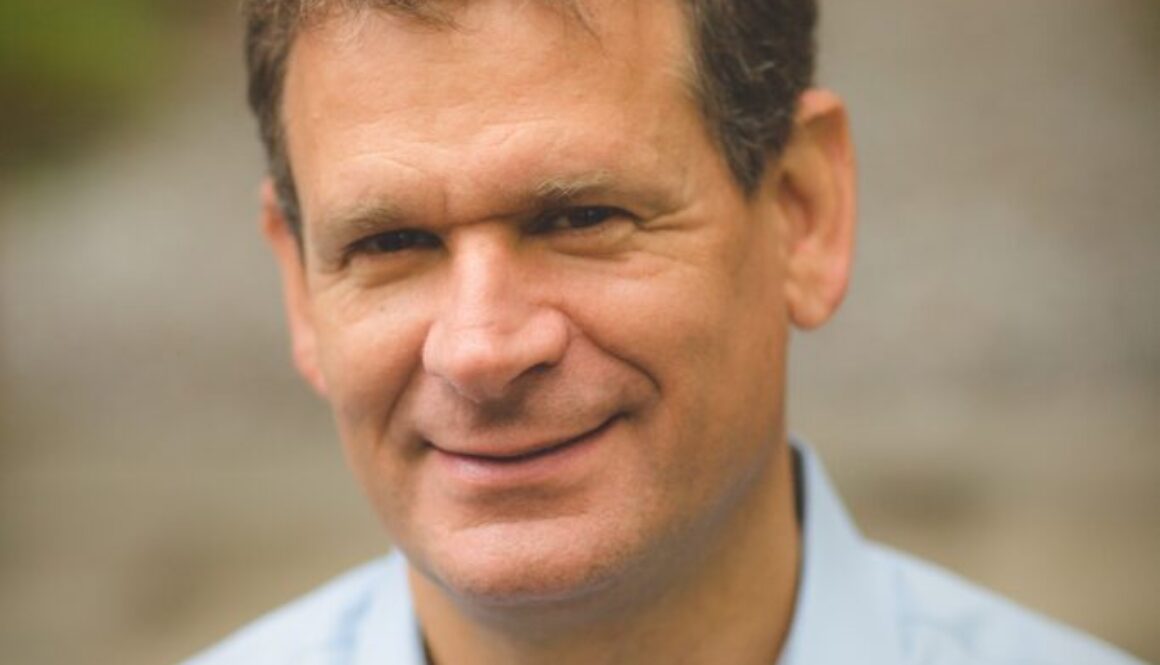
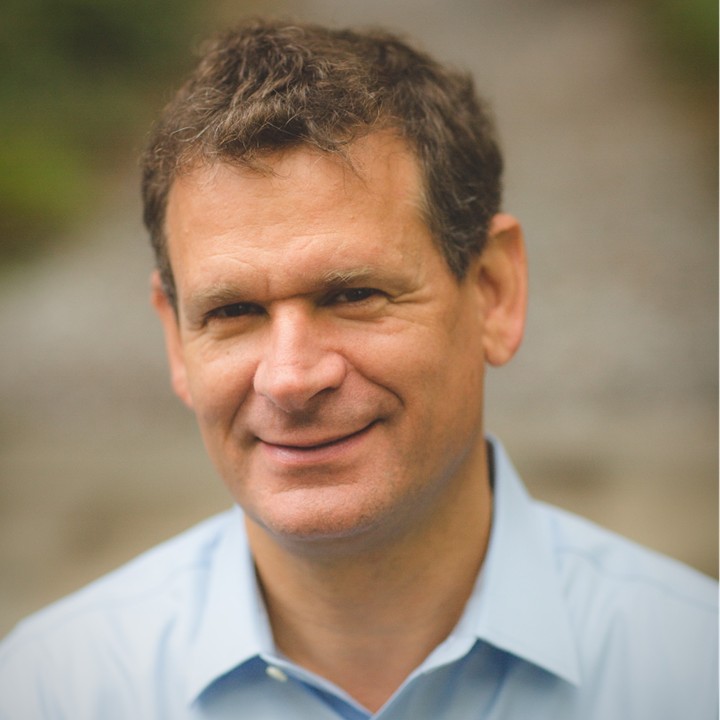
Why Values-Based Banking Matters with Ivan Frishberg
Where your money sits matters more than most people realize. Banks quietly shape the economy—and the climate—through every loan they make.
Introduction
Most people think of banks as neutral institutions—places to store money, pay bills, or get a loan. But behind the scenes, banks play a far more powerful role: they play a role in where money flows in the economy
In a recent Earth Talk, Ivan Frishberg, Chief Sustainability Officer at Amalgamated Bank, pulled back the curtain on how banking really works—and why aligning your finances with your values is one of the most overlooked tools for climate action. His message was clear: your bank is using your money. The question is—what for?
Key Insights
Banking Is Not Neutral—It Shapes the World
Banks are often seen as passive financial intermediaries. In reality, they are active decision-makers. When you deposit money, the bank doesn’t simply store it—it lends it out to businesses, developers, and projects.
As Frishberg explains, “where that money goes is really the primary impact.”
This means your savings could be funding industries that are important to you like alternative energy, affordable housing, and community businesses.
Where your money goes is your impact—even if you don’t see it. Ivan Frishberg
The system is simple: banks take deposits, lend money at higher rates, and profit from the difference. But the consequences of those lending decisions ripple across society and the environment.
Two Powerful Levers: Money and Voice
Frishberg describes two key ways banks influence the world:
- Their balance sheet (where money is invested or loaned)
- Their voice (their influence in policy and public discourse)
The first is direct and measurable: loans, investments, and financial products shape real-world outcomes. The second is more subtle but equally powerful. Financial institutions carry weight in political and regulatory conversations.
Frishberg recalls that after joining a bank, his influence in policy discussions increased dramatically—not because his expertise changed, but because his institutional affiliation did. “It matters what banks say,” he noted.
Together, these levers make banks one of the most influential—and underappreciated—actors in climate action.
Measuring the Invisible: The Rise of Carbon Accounting
One of the biggest challenges in aligning finance with climate goals is measurement. How do you calculate the climate impact of a loan or investment?
To solve this, Frishberg helped lead the development of the Partnership for Carbon Accounting Financials (PCAF), a global standard that allows financial institutions to measure the greenhouse gas emissions linked to their portfolios.
Key Takeaways
- Banks shape the economy through lending—not just storing money
- Your deposits fund real-world projects, including climate-impacting industries
- Measuring financed emissions enables accountability in banking
- Large banks prioritize scale; smaller banks can align with values
- Choosing a bank is a powerful, often overlooked climate action
Today, institutions representing over $100 trillion in assets use this framework.
This shift is significant. It turns abstract financial activity into measurable climate impact—and creates accountability.
Banks can now:
- Track emissions tied to their lending
- Set reduction targets
- Report progress publicly
It’s a critical step toward aligning the financial system with global climate goals.
Why Big Banks Struggle to Change
If values-based banking is so impactful, why don’t all banks adopt it?
The answer lies in how the system is structured.
Large banks are designed for scale and profitability. They spread risk across massive portfolios and tend to finance “everything” because diversification reduces risk and maximizes returns.
Frishberg describes this as a kind of “Swiss” neutrality: banks avoid making moral judgments about clients or industries.
Banks can be a force for good—or reinforce the status quo. Ivan Frishberg
But that neutrality comes at a cost. It makes it difficult for large institutions to say no to exposures that come with long-term or systemic risks.
In contrast, smaller or mission-driven banks often focus on specific sectors—like community development, clean energy, or social equity—and align lending with both financial and social impact.
Values-Based Banking: A Different Model
Values-based banks flip the traditional model. Instead of prioritizing growth and neutrality, they prioritize impact.
At Amalgamated Bank, nearly 40% of lending is focused on climate solutions, and over a quarter of loans support low-income or disadvantaged communities.
These institutions often:
- Invest in renewable energy and sustainable infrastructure
- Support affordable housing and community development
- Operate with transparency about where money is used
They are also part of global networks like the Global Alliance for Banking on Values, which promotes “triple bottom line” banking—people, planet, and profit.
Importantly, values-based banking doesn’t reject profitability. Instead, it redefines success to include long-term social and environmental outcomes.
Practical Takeaways & Implications
For individuals and organizations, the implications are both simple and powerful: your money is already shaping the world—you just may not see how.
Your bank is using your money. The question is: for what? Ivan Frishberg
When you deposit funds in a bank, that money becomes part of the bank’s lending pool. From an accounting perspective, it’s a liability—something the bank owes you—but in practice, it’s also a tool the bank uses to generate impact.
That means you have agency.
Here are practical steps to act on that insight:
- Research your bank: Tools like Bank.green and B Corp certifications can help assess impact.
- Ask questions: What industries does your bank finance? Do they disclose climate impact?
- Consider switching: Community banks, credit unions, and values-based banks often align more closely with sustainability goals.
- Align organizational funds: Nonprofits, businesses, and clubs can amplify impact by choosing aligned financial partners.
- Use your voice: Encourage institutions you belong to—schools, employers, associations—to evaluate their banking choices.
As Frishberg emphasizes, financial decisions are part of change-making. Aligning your money with your values isn’t just symbolic—it’s structural.
About This Earth Talk
Speaker: Ivan Frishberg
Chief Sustainability Officer at Amalgamated Bank, Ivan leads ESG strategy, corporate responsibility, and climate-focused financial initiatives. He also chairs the Partnership for Carbon Accounting Financials.
Date Presented: March 2026
🎥 Watch on YouTube
🎧 Listen as a Podcast
📖 Read the Blog
🌱 Learn more / Project links: Bank.green, Global Alliance for Banking on Values, B Corp, Partnership for Carbon Accounting Financials.

From Waste to Watts with Mariana Rojas
Can we turn farm waste into clean energy for rural communities? Listen to how Mariana Rojas, a Costa Rican engineering student, is transforming organic waste into practical climate solutions.
Introduction
In rural communities around the world, two challenges often coexist: limited access to reliable energy and an abundance of organic waste. What if one could solve the other?
That’s the question driving Mariana Rojas, a materials engineering student in Costa Rica, whose work focuses on converting agricultural waste into clean energy through biogas and green hydrogen. Her approach is simple, practical, and deeply rooted in local realities—offering a model that could scale far beyond her country.
Key Insights
Waste Is an Untapped Energy Resource
Rojas begins with a striking insight: waste is not just a problem—it’s a missed opportunity.
On a typical farm, animal manure is produced daily in large quantities. Left unmanaged, it releases methane, a greenhouse gas far more potent than carbon dioxide. Yet that same waste holds significant energy potential.
“Waste isn’t just a problem—it’s a powerful, untapped energy resource.” Mariana Rojas
“A single cow can generate enough waste to help cover a household’s daily energy needs,” Rojas explained during her Earth Talks presentation.
This creates a paradox: rural farms often struggle with energy access while simultaneously producing the raw materials needed to generate it.
From Manure to Biogas: A Circular System
At the heart of Rojas’s solution is a biodigester—a sealed system where microorganisms break down organic waste in the absence of oxygen, a process known as anaerobic digestion.
The result is biogas, primarily composed of methane, which can be used as fuel. At the same time, a nutrient-rich byproduct called digestate can be used as organic fertilizer.
This creates a circular system:
- Waste becomes energy
- Byproducts support agriculture
- Environmental pollution is reduced
Unlike solar or wind energy, this system is not weather-dependent. As long as farms produce waste, they produce energy.
Going Further: Producing Green Hydrogen
Rather than stopping at biogas, Rojas pushes the concept further.
After purification, methane from biogas can be converted into hydrogen through a process known as reforming. When the source is organic waste, the result is considered green hydrogen—a cleaner alternative to fossil fuel-derived hydrogen.
Key Takeaways
- Organic waste can be transformed into reliable, renewable energy for rural communities
- Biodigesters convert manure into biogas while reducing harmful methane emissions
- Green hydrogen adds value by expanding energy uses beyond direct fuel
- Small-scale systems empower farms with local, decentralized energy independence
- Collaboration is essential to scale solutions across regions and countries

This step increases the versatility of the system. Hydrogen can be used for:
- Electricity generation
- Industrial applications
- Future clean fuel systems
By adding this layer, the project transforms a basic waste solution into a forward-looking energy platform.
Designed for Small Farms, Not Mega-Industry
A key strength of Rojas’s approach is its scale.
Rather than targeting massive industrial farms, the system is designed for small and medium-sized operations—common in countries like Costa Rica. In pilot projects, even a handful of animals can produce enough waste to power parts of a home or farm operation.
This decentralized model offers several advantages:
- Lower infrastructure costs
- Reduced transmission losses
- Greater energy independence
- Increased resilience in remote areas
As Rojas noted, “This is about using local resources to solve local challenges.”
Real Benefits—and Real Limitations
The system is not without challenges.
Initial investment costs can be significant, especially for biodigesters and hydrogen conversion systems. Proper training is also essential to manage gas handling and system efficiency.
“We are wasting energy while creating pollution. This project changes that.” Mariana Rojas
There are also broader considerations:
- Larger-scale systems can face environmental and operational challenges
- Methane leakage must be carefully managed
- Waste treatment alone does not solve all impacts of livestock production
Still, these challenges are manageable with good design, education, and policy support. And at smaller scales, many risks are reduced.
Practical Takeaways & Implications
Rojas’s work offers a compelling blueprint for sustainable development—particularly in rural and underserved regions.
What makes this model powerful is its integration:
- It reduces greenhouse gas emissions by capturing methane
- It provides decentralized, reliable energy
- It lowers costs for farmers
- It creates additional value through fertilizer production
For communities without grid access, this can be transformative. In Costa Rica alone, thousands of households still lack reliable electricity despite the country’s strong renewable energy profile.
“Local resources can solve local challenges—and transform entire communities.” Mariana Rojas
Scaling this solution will require collaboration:
- Universities for research and innovation
- Governments for policy and funding support
- NGOs and networks (like Rotary) for community implementation
The model is also adaptable beyond Costa Rica—to agricultural regions across Latin America, Africa, and Asia.
Ultimately, this is not just about energy. It’s about empowerment—giving communities the tools to turn everyday waste into opportunity.
About This Earth Talk
Speaker: Mariana Rojas
Materials Engineering student at the Technological Institute of Costa Rica, focused on biomaterials, clean energy, and rural innovation. She also mentors young women in STEM.
Date Presented: 19 March 2026
🎥 Watch on YouTube
🎧 Listen as a Podcast
📖 Read the Blog
🌱 Learn more / Project links: [Link]
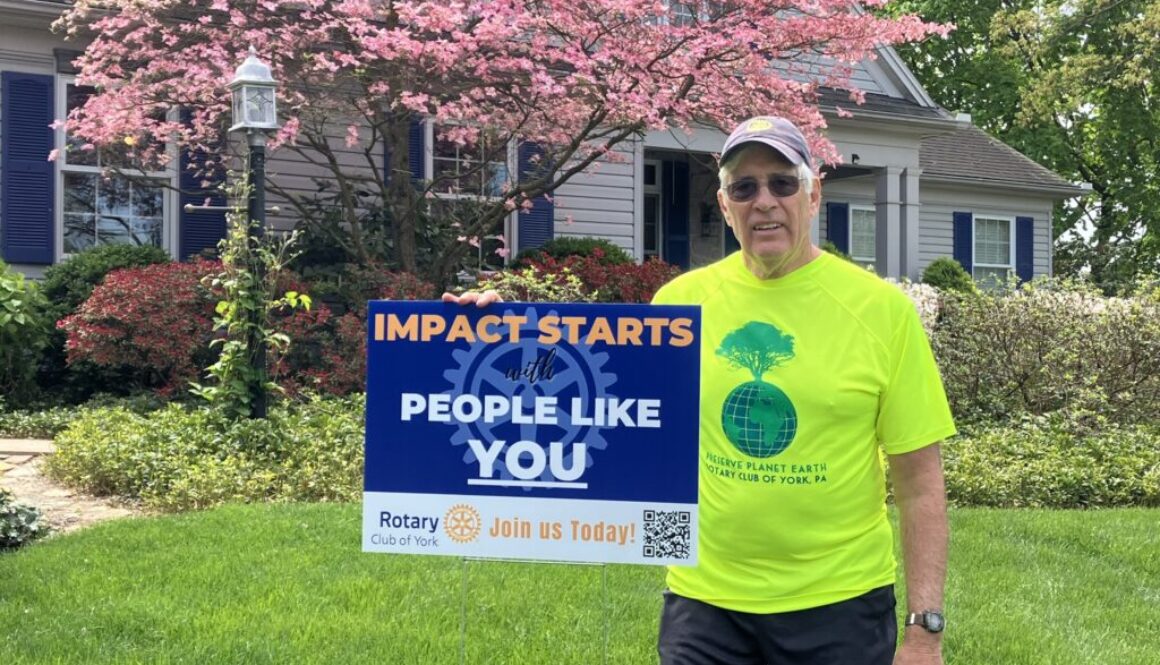
35 Years of Preserve Planet Earth with Al Skykes
Long before environmental action became a global Rotary priority, one club in Pennsylvania began with a simple recycling game. Thirty-five years later, their efforts have transformed parks, waterways, and city streets—one project at a time.
Introduction
In the late 1980s, recycling was still a new idea for many American communities. When Pennsylvania introduced a recycling mandate in 1988, residents were unsure what belonged in a recycling bin and what didn’t. Instead of waiting for answers, the Rotary Club of York stepped in.
What began as a small “Recycling Committee” soon grew into something much larger. Over the next three and a half decades, the club launched projects ranging from storm-drain protection and illegal dump cleanups to large-scale urban tree planting and lake restoration. The initiative eventually adopted the name Preserve Planet Earth, aligning with a broader environmental push across Rotary.
For longtime Rotarian Al Sykes, who has been part of the club for more than 40 years, the experience shows what sustained local action can accomplish. “When I sat down to put it on paper,” he recalled, “it was like—wow, we did a bunch of stuff.”
Today, the story of Preserve Planet Earth in York offers a powerful lesson: meaningful environmental change often begins with small, community-driven steps.
From Recycling Game to Community Movement Tumpa Mostafa
The club’s environmental work started with education.
When recycling laws took effect in Pennsylvania, many residents didn’t understand what could be recycled. Rotary volunteers created a hands-on activity called the “recycling game.” At community events and schools, children sorted items into two barrels—recyclable and non-recyclable—while learning the basics of waste management.
The effort quickly built awareness across York.
Soon after, Rotary International introduced the Preserve Planet Earth initiative in 1990. The York club adopted the name and expanded its ambitions. What started as recycling education became a long-term environmental program involving dozens of volunteers and multiple partners.
The early lesson was simple: education can spark lasting action.
Key Takeaways
- York Rotary’s environmental work began with a simple recycling education program in 1988.
- Volunteers installed pollution warnings on nearly 800 storm drains across the city.
- The club has planted almost 1,000 trees to rebuild York’s urban tree canopy.
- Community partnerships helped restore a damaged lake and revitalize public spaces.
- Long-term environmental impact grows from consistent local action.

Protecting Waterways, One Storm Drain at a Time
One of the committee’s most visible early projects focused on protecting local waterways.
York sits just 10 miles from the Susquehanna River, and streams flowing through the city eventually drain into the Chesapeake Bay watershed. To help prevent pollution, Rotarians installed “No Dumping — Drains to River” markers on every storm drain in the city—nearly 800 in total.
The message reminded residents that anything entering those drains ultimately reaches the river.
The group also tackled illegal dump sites within city limits, organizing cleanups that restored neglected spaces. Some areas required repeated efforts, but over time the cleanups helped change behavior and prevent further dumping.
Small reminders—like a simple message on a storm drain—can make a big difference in public awareness.
Rebuilding the Urban Tree Canopy Tumpa Mostafa
Tree planting has become the centerpiece of the club’s environmental work.
York’s urban tree canopy had declined over time as aging trees died and were not replaced. The Rotary committee launched a project called “Restoring the Canopy in York City.”
The goal was straightforward: replant missing trees wherever possible.
Volunteers replaced dead trees, ground out stumps in empty sidewalk wells, and planted new trees throughout downtown neighborhoods. To date, the project has planted nearly 1,000 trees across the city.
Sykes believes tree planting is one of the most accessible environmental actions communities can take.
“I don’t think there are many things we as individuals—or as one club—can do that have a greater environmental impact than planting trees,” he said.
Beyond cooling streets and improving air quality, the trees also help restore neighborhood pride and create greener public spaces.
Restoring a Lake and Reviving a Community Space Tumpa Mostafa
Not all projects were small.
One of the committee’s largest efforts focused on Kiwanis Lake, a 100-acre lake in central York. Over time, the lake had deteriorated due to sediment buildup, water flow problems, and large populations of geese.
The situation worsened when a damaged dam caused flooding upstream during heavy rains.
Rotary volunteers partnered with engineers and community organizations to restore the site. The project included repairing the dam, dredging sediment from the lake bottom, and installing multiple aeration fountains to improve water quality.
The result transformed the lake back into a community destination. Families now fish there, and the surrounding park has become a place for recreation and environmental education.
It’s an example of how service clubs can step in when public resources are limited.
Innovating with Plastic and Battery Recycling
The committee has also explored emerging environmental solutions.
One initiative helped introduce a program that recycles all types of plastic, including bags and foam, which are often difficult to process. The plastics are melted down and converted into a durable additive used in concrete production.
The innovation replaces river sand—a resource increasingly in short supply—and keeps plastics out of landfills.
The club is also exploring lithium-ion battery recycling, working with partners and local waste authorities to establish safer collection systems.
Recent fires linked to improperly stored batteries have highlighted the importance of responsible recycling infrastructure. By coordinating with waste management agencies, the Rotary club hopes to help create safer disposal pathways.
About This Earth Talk
Speaker: Al Sykes
Al Sykes is a 40-year Rotarian and Past President of the Rotary Club of York, Pennsylvania. He chaired the club’s Preserve Planet Earth Committee for a decade and spent 30 years as an Area Manager at Packaging Corporation of America. He holds an MBA from York College and is an alumnus of Franklin & Marshall College.
Date Presented: March 5, 2026
🎥 Watch on YouTube
🎧 Listen as a Podcast
🌱 Learn more / Project links

AI and the Ethics of the Earth with Tumpa Mostafa
As artificial intelligence reshapes climate decision-making, the values embedded in its code may determine the future of our planet.
From wildfire prediction to flood mapping, AI is becoming a powerful climate tool. But if it is programmed only to protect profits and human convenience, it may deepen the ecological crisis it aims to solve.
Introduction
In 2026, the phrase “climate change” can feel almost too small. In Canada, temperatures are rising at roughly twice the global average. Wildfires are no longer isolated events—they’re a season. Water insecurity affects the prairies and northern communities. Flood risks are increasing. These crises are interconnected, touching health, biodiversity, culture, and economic stability.
In response, governments and industries are turning to artificial intelligence (AI)—the most powerful analytical tool humanity has ever built. But writer and environmental advocate Tumpa Mostafa argues, before we hand over the keys to our planet, we must ask: What values are driving these systems?
AI doesn’t have values. It reflects the values we embed in it. Tumpa Mostafa
Her answer is both philosophical and practical: the future of AI must be ecocentric—grounded in the ethics of the Earth itself.
AI in a Warming Canada
Canada has emerged as a global AI leader, with research hubs in Montreal, Toronto, and Edmonton. AI systems are already:
- Predicting wildfire ignition zones
- Mapping flood risks
- Tracking habitat loss
- Optimizing power grids
- Forecasting crop yields
These tools enable faster emergency responses and smarter planning. In many cases, they save lives.
Yet there is a paradox.
“We’re using a high-carbon tool to solve a carbon problem,” Mostafa explains. Training large AI models can consume enormous amounts of electricity and water. Data centers require constant cooling. The environmental footprint is real—and often hidden.
Key Takeaways
- AI increasingly guides climate decisions, from wildfires to water monitoring.
- Most AI systems prioritize human profit over ecological health.
- Ecocentric ethics value ecosystems for their intrinsic worth.
- AI reflects the values humans program into it.
- A mindset shift can align technology with planetary boundaries.

Meanwhile, Canada’s proposed Artificial Intelligence and Data Act focuses primarily on economic growth and human safety. Those are important priorities, Mostafa acknowledges. But something is missing.
“The Earth is not a stakeholder in our AI policy,” she says. “That’s the glaring hole.”
The Anthropocentric Trap
Most AI systems today are built on an anthropocentric worldview—one that places human needs at the center.
Anthropocentrism sees nature primarily as a resource to manage for human benefit. In AI systems, this often translates into optimization for:
- Efficiency
- Profit
- Cost reduction
- Human comfort
If an AI is asked to maximize timber production, it may recommend clearing forests with ruthless efficiency. It will not automatically account for fungal networks in the soil or the migration of caribou—because those ecological relationships don’t show up on a financial balance sheet.
“We have taught this machine to see the world exactly as we have seen it in the past,” Mostafa says. “As something to be used.”
The danger? We risk reinforcing the same patterns that helped create the climate crisis in the first place.
The Ecocentric Flip
Ecocentrism offers a different lens.
Unlike anthropocentrism, ecocentrism recognizes that ecosystems—soil, water, forests, species, atmosphere—have intrinsic value. That means they matter not only because they serve human needs, but because they exist as part of a living whole.
We’re using a high-carbon tool to solve a carbon problem. Tumpa Mostafa
“A river is valuable not because it gives us electricity,” Mostafa says, “but because it is a river.”
Under an ecocentric framework, the question shifts from What’s good for people? to What’s good for the whole system?
Applied to AI, this shift could be transformative.
AI systems do not possess values. They reflect the values we embed in them. If we program them to prioritize ecological integrity—biodiversity, soil health, carbon sequestration—they will optimize accordingly.
“We are responsible for what values we embed in our AI systems,” Mostafa emphasizes.
What Would Ecocentric AI Look Like?
Imagine an AI system that measures success not just in dollars saved, but in biodiversity restored.
An AI that alerts a corporation not only when profits decline—but when the health of a local watershed drops by 1%.
An algorithm that must pass an ecological audit before being deployed by the government.
Mostafa proposes practical steps:
- Mandate ecological metrics.
AI systems should report ecological return on investment, not just financial return. - Require transparency.
Companies should disclose the energy and water footprints of AI operations. - Embrace “slow AI.”
Rather than racing for market dominance, prioritize deliberate, ethical, sustainable development.
“Ecocentric AI is not about rejecting technology,” Mostafa says. “It’s about a mindset shift.”
Indigenous Knowledge as Guardrails
Ecocentrism is not new. Many Indigenous worldviews have long recognized humans as part of—not separate from—the Earth.
In Canada and globally, Indigenous communities have practiced forms of ecological stewardship for millennia. Traditional ecological knowledge emphasizes interdependence, reciprocity, and long-term balance.
The Earth must become a stakeholder in our AI systems. Tumpa Mostafa
Mostafa argues that this knowledge should serve as a guardrail for AI development.
“It’s long overdue for Indigenous communities to be meaningfully involved in climate planning,” she says. “It would only benefit the whole ecosystem.”
Bringing Indigenous perspectives into AI governance is not symbolic—it’s practical. These knowledge systems offer tested frameworks for living within ecological limits.
Two Possible Futures
Mostafa describes two diverging paths.
Path One: Anthropocentric AI
We use AI to squeeze more efficiency from an already stressed planet. Disaster prediction improves, but disasters intensify because root causes remain unaddressed.
Path Two: Ecocentric AI
We treat the Earth as the ultimate stakeholder. AI becomes a digital witness and partner in regeneration. It helps us live within planetary boundaries instead of engineering our way around them.
The choice is not technological—it is ethical.
And it is urgent.
Practical Takeaways & Implications
For Rotarians, nonprofit leaders, and professionals worldwide, the implications are tangible.
- Ask value-based questions. When adopting AI tools, inquire about environmental footprint and design principles.
- Support transparency initiatives. Advocate for disclosure of energy and water use.
- Vote and lead thoughtfully. Encourage policymakers to integrate ecological metrics into AI regulation.
- Choose aligned platforms. Seek technology providers committed to renewable energy and sustainability.
- Keep humans in the loop. AI is powerful—but not infallible. Critical thinking remains essential.
Mostafa does not call for abandoning AI. She acknowledges it is already woven into daily life—from search engines to logistics systems.
Instead, she calls for collective responsibility.
“As Rotarians, we understand that service isn’t just a slogan,” she says. “It’s a commitment to the future.”
AI may be the most powerful tool humanity has created. The question is whether we will code it only for ourselves—or for the Earth.
AI and the Ethics of the Earth: A Call to design AI that serves the whole ecosystem
 Watch on
  Listen as a
  Read the

One Plate, One Planet: A Global Invitation to Act with Steve Bender
How Rotary, EARTHx, and plant-rich eating are turning climate concern into practical action
As climate impacts intensify and communities search for meaningful solutions, a growing coalition of business leaders, Rotary members, and environmental advocates is focusing on something surprisingly simple: what’s on our plates.
At a recent Earth Talks gathering, sustainability leader Steve Bender, Chairman of the US Green Chamber of Commerce, shared a bold vision linking food, collaboration, and global environmental action. From launching the largest Rotary environmental experience at EARTHx to promoting a 15-day plant-rich challenge, his message was clear: we don’t need perfection—we need participation.
Food: The Climate Solution Hiding in Plain Sight Jeff Heie
One of the most powerful climate actions available today doesn’t require new technology. It requires awareness.
Bender points to research from Project Drawdown, a science-based organization that ranks climate solutions by impact. Food production and food waste consistently appear among the top contributors to greenhouse gas emissions.
“Food production and food waste are two of the top issues with climate,” Bender said. “We’re not trying to take anyone’s meat away. We’re trying to help everybody get healthier—including the planet.”
The idea behind One Plate, One Planet is simple: small dietary shifts—like eating plant-based meals once or twice a week—can reduce emissions, conserve water, protect biodiversity, and improve health.
Bender speaks from experience. Raised on a cattle farm in Kansas, he enjoys steak as much as anyone. But when he reduced processed meats and embraced more plant-rich meals, he saw measurable health improvements.
“If we can just take the first three steps,” he said, referencing his 750-mile Camino walk, “everything changes.”
The goal is progress, not perfection.
The 15-Day Plant-Rich Challenge
To make change accessible, Earth Talks leaders are inviting individuals and Rotary clubs to join a 15-day Plant-Rich Diet Challenge beginning March 1.
Participants receive daily emails filled with:
- Easy recipes
- Expert presentations
- Cooking demonstrations
- Medical insights on reversing chronic disease
- Real-life transformation stories
It’s designed to be practical and affordable. No one is asked to go fully vegan. Instead, participants are encouraged to try one plant-based meal at a time.
As one presenter described it, plant-rich eating is the “Swiss Army knife” of environmental action. It positively affects climate, land use, water conservation, and pollution—while improving personal health.
Three meals a day offer three opportunities to make a difference.
Rotary’s Environmental Experience at EARTHx
Food is only part of the story.
From April 20–22, Rotary will host what Bender calls the largest Rotary environmental conference in the world inside the broader EARTHx event in Dallas, Texas. The Rotary Environmental Experience will occupy 30,000 square feet within a 75,000-square-foot expo space.
The event brings together:
- Rotary districts from around the globe
- Environmental innovators
- Nobel laureates
- Business leaders
- Youth activists
- Sustainability entrepreneurs
Rotary International President Barry Rassin, who has spoken about climate risks facing island nations, will participate. Leaders from Africa, South Asia, Europe, and Latin America are expected to attend.
But this is not just a conference—it’s a launchpad.
“We want this to be the beginning of what we accomplish over the next year,” Bender said.
100 Projects in 100 Countries
One of the event’s most ambitious initiatives is 100 Projects in 100 Countries.
Rotary clubs worldwide are invited to submit photos, videos, and descriptions of environmental projects. These will be showcased on screens throughout the event and shared through media partnerships.
The aim is twofold:
- Inspire replication of successful projects.
- Attract new members—especially younger generations.
“If you want to recruit younger members,” Bender noted, “you better be doing environmental projects.”
Rotary operates in more than 200 countries and regions. By amplifying stories of reforestation, coral reef restoration, clean water access, and renewable energy initiatives, organizers hope to break down silos and encourage collaboration.
Beyond Food: Regenerative Housing and Circular Design
Sustainability extends beyond diet.
At EARTHx, attendees will also tour the winning home from an international Design & Build Experience competition. The structure demonstrates how smaller, energy-efficient homes—built with recycled and circular materials—can redefine modern living.
“I’ve toured more than 200 sustainable and tiny homes this year,” Bender said. “This one is in a class of its own.”
From recycled materials to advanced insulation and steel framing, the home showcases how thoughtful design can reduce resource use without sacrificing comfort.
It’s a reminder that sustainability is not about deprivation. It’s about smarter systems
The Role of Business: Green Chambers of Commerce
As Chairman of the US Green Chamber of Commerce, Bender is also working to help traditional chambers transition toward sustainability.
The Green Chamber model:
- Shares best practices
- Helps businesses reduce environmental impact
- Encourages green certifications
- Promotes collaboration across sectors
“We can’t depend on governments alone,” Bender said. “We have to depend on ourselves.”
By partnering with local and international chambers, restaurants, and entrepreneurs, the goal is to make sustainable business the norm—not the niche.
Participation Without Travel
Recognizing carbon concerns and travel costs, organizers are prioritizing digital access.
Sessions will be live-streamed. Projects will be showcased online. Clubs worldwide can participate remotely in the 100 Projects initiative and the Plant-Rich challenge.
The emphasis is inclusion.
Whether you attend in person, tune in virtually, or simply adopt Meatless Mondays, you are part of the movement.
Practical Takeaways & Implications
This Earth Talk highlights a powerful truth: climate action is not confined to policymakers or scientists. It belongs to communities.
Here’s what you can do:
- Start with your plate.
Try one plant-rich meal per week. Explore new recipes. Reduce food waste. - Share your story.
If your Rotary club runs an environmental project, document it and submit it for global visibility. - Build partnerships.
Connect with local businesses, chambers of commerce, and nonprofits to amplify impact. - Think collaboration, not competition.
Break down silos. Share lessons learned. Invite others in.
The path to sustainability does not require sweeping overnight change. It begins with three steps—taken together.
As Bender reminds us, Rotary may be “the best organization in the world.” The opportunity now is to make sure the world knows it.
Key Takeaways
Key Takeaways
- Food production and waste are top climate drivers—diet shifts matter.
- Small plant-rich changes can improve health and reduce emissions.
- 100 Projects in 100 Countries showcases Rotary’s global impact.
- Sustainable housing proves circular design is practical today.
- Collaboration across business and community accelerates solutions.
About This Earth Talk
Speaker: Steve Bender
Chairman of the US Green Chamber of Commerce and global sustainability leader. Bender advises organizations worldwide on building responsible, resilient growth strategies and launching environmental initiatives.
Date Presented: 19 February 2026
🎥 Watch on YouTube
🎧 Listen as a Podcast
🌱 Learn more / Project links