
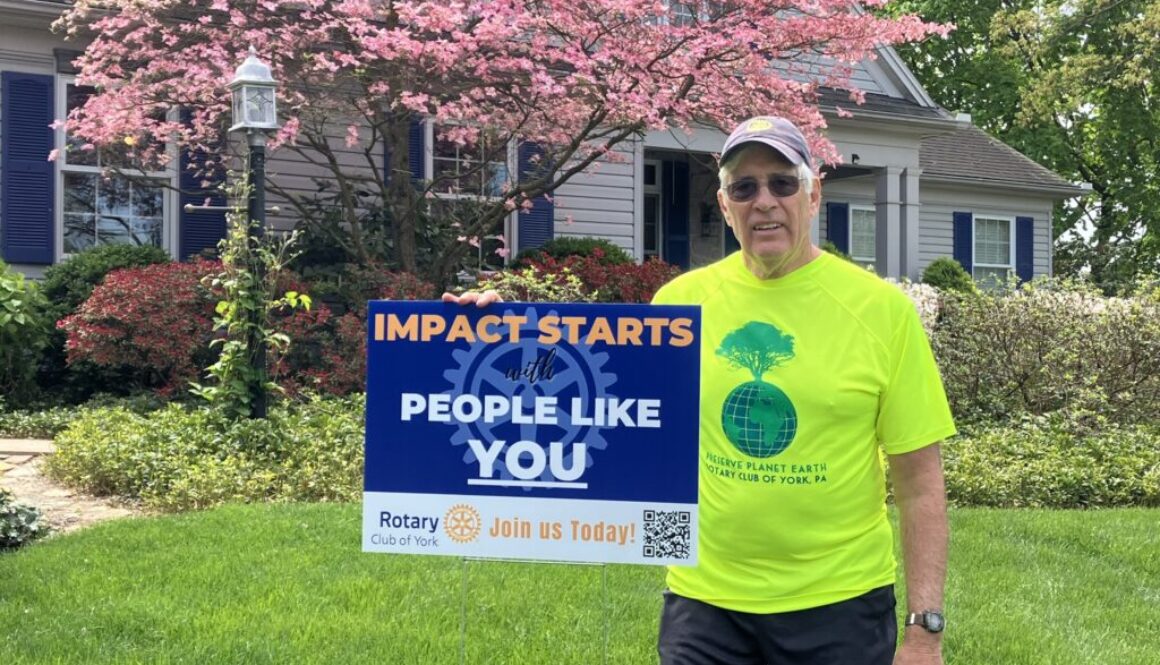
35 Years of Preserve Planet Earth with Al Skykes
Long before environmental action became a global Rotary priority, one club in Pennsylvania began with a simple recycling game. Thirty-five years later, their efforts have transformed parks, waterways, and city streets—one project at a time.
Introduction
In the late 1980s, recycling was still a new idea for many American communities. When Pennsylvania introduced a recycling mandate in 1988, residents were unsure what belonged in a recycling bin and what didn’t. Instead of waiting for answers, the Rotary Club of York stepped in.
What began as a small “Recycling Committee” soon grew into something much larger. Over the next three and a half decades, the club launched projects ranging from storm-drain protection and illegal dump cleanups to large-scale urban tree planting and lake restoration. The initiative eventually adopted the name Preserve Planet Earth, aligning with a broader environmental push across Rotary.
For longtime Rotarian Al Sykes, who has been part of the club for more than 40 years, the experience shows what sustained local action can accomplish. “When I sat down to put it on paper,” he recalled, “it was like—wow, we did a bunch of stuff.”
Today, the story of Preserve Planet Earth in York offers a powerful lesson: meaningful environmental change often begins with small, community-driven steps.
From Recycling Game to Community Movement Tumpa Mostafa
The club’s environmental work started with education.
When recycling laws took effect in Pennsylvania, many residents didn’t understand what could be recycled. Rotary volunteers created a hands-on activity called the “recycling game.” At community events and schools, children sorted items into two barrels—recyclable and non-recyclable—while learning the basics of waste management.
The effort quickly built awareness across York.
Soon after, Rotary International introduced the Preserve Planet Earth initiative in 1990. The York club adopted the name and expanded its ambitions. What started as recycling education became a long-term environmental program involving dozens of volunteers and multiple partners.
The early lesson was simple: education can spark lasting action.
Key Takeaways
- York Rotary’s environmental work began with a simple recycling education program in 1988.
- Volunteers installed pollution warnings on nearly 800 storm drains across the city.
- The club has planted almost 1,000 trees to rebuild York’s urban tree canopy.
- Community partnerships helped restore a damaged lake and revitalize public spaces.
- Long-term environmental impact grows from consistent local action.

Protecting Waterways, One Storm Drain at a Time
One of the committee’s most visible early projects focused on protecting local waterways.
York sits just 10 miles from the Susquehanna River, and streams flowing through the city eventually drain into the Chesapeake Bay watershed. To help prevent pollution, Rotarians installed “No Dumping — Drains to River” markers on every storm drain in the city—nearly 800 in total.
The message reminded residents that anything entering those drains ultimately reaches the river.
The group also tackled illegal dump sites within city limits, organizing cleanups that restored neglected spaces. Some areas required repeated efforts, but over time the cleanups helped change behavior and prevent further dumping.
Small reminders—like a simple message on a storm drain—can make a big difference in public awareness.
Rebuilding the Urban Tree Canopy Tumpa Mostafa
Tree planting has become the centerpiece of the club’s environmental work.
York’s urban tree canopy had declined over time as aging trees died and were not replaced. The Rotary committee launched a project called “Restoring the Canopy in York City.”
The goal was straightforward: replant missing trees wherever possible.
Volunteers replaced dead trees, ground out stumps in empty sidewalk wells, and planted new trees throughout downtown neighborhoods. To date, the project has planted nearly 1,000 trees across the city.
Sykes believes tree planting is one of the most accessible environmental actions communities can take.
“I don’t think there are many things we as individuals—or as one club—can do that have a greater environmental impact than planting trees,” he said.
Beyond cooling streets and improving air quality, the trees also help restore neighborhood pride and create greener public spaces.
Restoring a Lake and Reviving a Community Space Tumpa Mostafa
Not all projects were small.
One of the committee’s largest efforts focused on Kiwanis Lake, a 100-acre lake in central York. Over time, the lake had deteriorated due to sediment buildup, water flow problems, and large populations of geese.
The situation worsened when a damaged dam caused flooding upstream during heavy rains.
Rotary volunteers partnered with engineers and community organizations to restore the site. The project included repairing the dam, dredging sediment from the lake bottom, and installing multiple aeration fountains to improve water quality.
The result transformed the lake back into a community destination. Families now fish there, and the surrounding park has become a place for recreation and environmental education.
It’s an example of how service clubs can step in when public resources are limited.
Innovating with Plastic and Battery Recycling
The committee has also explored emerging environmental solutions.
One initiative helped introduce a program that recycles all types of plastic, including bags and foam, which are often difficult to process. The plastics are melted down and converted into a durable additive used in concrete production.
The innovation replaces river sand—a resource increasingly in short supply—and keeps plastics out of landfills.
The club is also exploring lithium-ion battery recycling, working with partners and local waste authorities to establish safer collection systems.
Recent fires linked to improperly stored batteries have highlighted the importance of responsible recycling infrastructure. By coordinating with waste management agencies, the Rotary club hopes to help create safer disposal pathways.
About This Earth Talk
Speaker: Al Sykes
Al Sykes is a 40-year Rotarian and Past President of the Rotary Club of York, Pennsylvania. He chaired the club’s Preserve Planet Earth Committee for a decade and spent 30 years as an Area Manager at Packaging Corporation of America. He holds an MBA from York College and is an alumnus of Franklin & Marshall College.
Date Presented: March 5, 2026
🎥 Watch on YouTube
🎧 Listen as a Podcast
🌱 Learn more / Project links