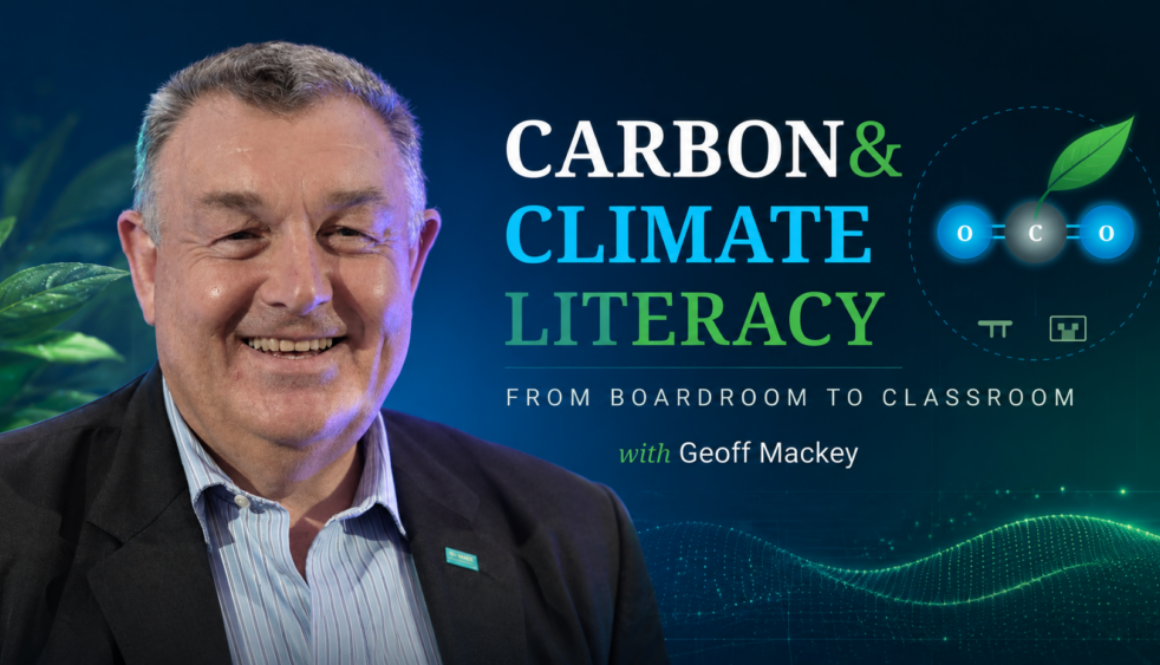
Carbon and Climate Literacy from Boardroom to Schoolroom with Geoff Mackey
What does it take to move carbon and climate literacy from expert circles into everyday decision-making—in boardrooms, schools, Rotary clubs, and communities?
In this Earth Talks presentation, Geoff Mackey brought together the many threads of his life: farm upbringing, biology, corporate sustainability leadership, Rotary service, public policy engagement, education, and community action. Raised on a farm in South Armagh, educated in biology in Liverpool, and later earning a doctorate on the business value of social networks, Geoff has spent his career translating complex sustainability challenges into practical conversations that help people act.
His message was clear: business as usual is not enough. Carbon and climate literacy are no longer optional topics for environmental specialists. They are essential tools for better governance, stronger strategy, responsible business, effective education, and community leadership.
“Business as usual is not enough.” Geoff Mackey
Geoff described carbon and climate literacy as a shared framework for understanding the impacts, systems, trade-offs, and choices connected to climate change. Without a common language, people may use the same words—carbon footprint, resilience, decarbonization, sustainability, equity—while meaning very different things. That confusion can block action. Good literacy, he argued, strengthens governance and strategy because it helps boards, businesses, educators, policymakers, and community leaders make better decisions together.
Why Literacy Matters
Geoff began with the simplest possible reminder: we have one planet. While climate discussions can quickly become technical, political, or overwhelming, the starting point is direct: this is the home we share, and the consequences of a warming world are already real.
For Geoff, literacy is not about memorizing scientific terms. It is about building enough shared understanding to weigh trade-offs, recognize risks, and choose better actions. He emphasized that carbon and climate issues affect food, energy, transport, public health, national security, waste, business continuity, and the resilience of communities.
Key Takeaways
- Business as usual is not enough. Climate change requires more than small adjustments around the edges.
- Carbon and climate literacy create agency. When people understand the systems, vocabulary, and choices involved, they are better able to act.
- Shared language matters. Organizations cannot make good decisions if people use the same words but mean different things.
- Climate literacy belongs everywhere. It is needed in boardrooms, classrooms, Rotary clubs, community groups, and policy discussions.
- Rotary can lead. Through service, education, advocacy, and example, Rotarians can help communities move from awareness to action.
He also cautioned that sustainability must not be reduced to a single image or issue. The polar bear may be an iconic climate symbol, but communities are also facing questions about food security, energy systems, health, supply chains, and economic stability. Sustainability, he said, is about balance—and that balance means different things to different people.
From Business Strategy to Community Responsibility
Drawing on his experience in industry, including his work as European Sustainability Director for BASF, Geoff made the case that climate literacy belongs in the boardroom. Climate change is not simply an environmental concern; it is a business strategy issue. It affects risk, resilience, supply chains, operations, energy demand, resource use, and long-term continuity.
Businesses understand the language of cost-effective processes, efficiency, risk management, and innovation. Geoff connected those familiar business concepts to sustainability, noting that reduce, reuse, recycle is not only good for the planet—it is good business.
He also challenged the idea that business exists only to generate economic return. In his view, business has a responsibility to its people, to those affected by its activities, and to the environment around it. While he acknowledged that not everyone agrees with that statement, he made clear that it is central to his own approach.
From Schoolroom to Lifelong Learning
The second major thread in Geoff’s talk was education. He introduced the work of CAPE—Climate Adaptive Pathways for Education, which is helping schools in the United Kingdom build frameworks for climate understanding and critical thinking. Geoff warned that schools may appear to be “doing sustainability” because they recycle, pick up litter, plant trees, or have an eco-council. Those activities matter, but sustainability is much broader.
Climate education, he said, cuts across science, geography, history, language, and storytelling. It is about helping young people understand systems, consequences, vocabulary, and choices so they can make better decisions than previous generations have made.
“Good literacy will strengthen governance and strategy.” Geoff Mackey
At the same time, Geoff stressed that learning is not limited to young people. “Every day is a school day,” he reminded the group. Adults, business leaders, Rotarians, policymakers, and community members all need opportunities to learn, reflect, and act.
The Power—and Problem—of Language
One of Geoff’s strongest points was that people are often “separated by a common language.” Climate vocabulary can be confusing because many words have both everyday meanings and scientific meanings. Words such as sink, source, feedback, sensitivity, footprint, equity, resilience, and decarbonization may sound familiar, but they can carry very different meanings depending on context.
That matters because unclear language creates unclear action. If a Rotary club, school board, business team, or government agency lacks a shared understanding of the words used, it becomes much harder to build trust, design policy, or take meaningful steps.
Geoff called for agreed vocabulary and practical frameworks that help people move from confusion to action. Literacy, in this sense, is culture-building. It helps people ask better questions, challenge myths, understand scientific facts, and create a common basis for decision-making.
Rotary’s Role
For Geoff, Rotary has a special opportunity. Rotary clubs are embedded in communities. They bring together people with diverse professional skills, local knowledge, service experience, and global connections. That makes Rotary well-positioned to support climate and carbon literacy in both formal and informal settings.
Rotarians can help schools, community groups, churches, halls, businesses, and local initiatives understand the issues and take practical steps. They can support training programs, model sustainable practices, ask better questions about their own meetings and travel, and use service projects to demonstrate climate-smart choices.
“There is only our answer—and we all can do more.” Geoff Mackey
Geoff encouraged Rotarians to examine their own practices: Why not car share? Why fly to meetings when another option exists? How can clubs reduce waste, support local food choices, advocate for better decisions, and build sustainability into policies and programs?
His point was not perfection. In fact, he repeatedly reminded the audience that none of us has all the answers. But everyone can do more.
Practical Actions
Geoff offered a wide range of entry points for action, including:
Build shared understanding. Start by asking what people mean when they use climate-related terms. Do not assume everyone shares the same definitions.
Use credible information. Ground conversations in science, facts, and real-world impacts.
Connect climate to everyday choices. Food, water, transport, waste, energy, consumption, and advocacy all matter.
Support education at every age. Schools are essential, but adults also need climate and carbon literacy.
Make sustainability part of governance. Boards, clubs, and organizations should use climate literacy to strengthen strategy, risk management, and decision-making.
Act locally while thinking systemically. Every project, policy, meeting, and community conversation can contribute to a broader cultural shift.
About This Earth Talk
Speaker: Geoff Mackey
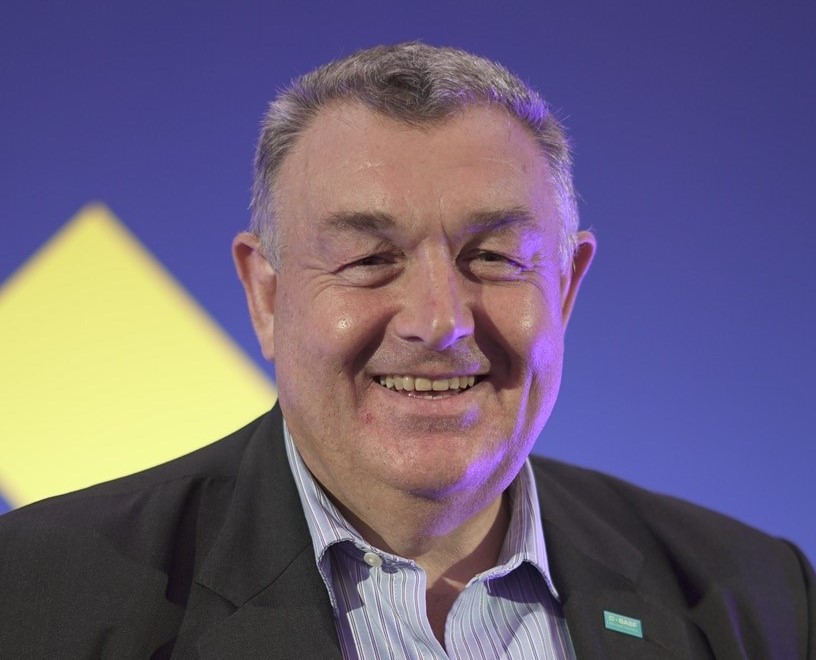
Geoff Mackey is a seasoned strategic business leader, sustainability adviser, charity fundraiser, award-winning writer, and Rotary leader living in England. Raised on a South Armagh farm, he studied biology in Liverpool and earned a doctorate on the business value of social networks. Following a successful corporate career, including senior sustainability leadership in industry, Geoff now works as a strategic industrial adviser, helping organizations understand, communicate, and act on sustainability, carbon literacy, and climate responsibility.
Date Presented: 28 May 2026
🎥 Watch on YouTube
🎧 Listen as a Podcast
📖 Read the Blog