
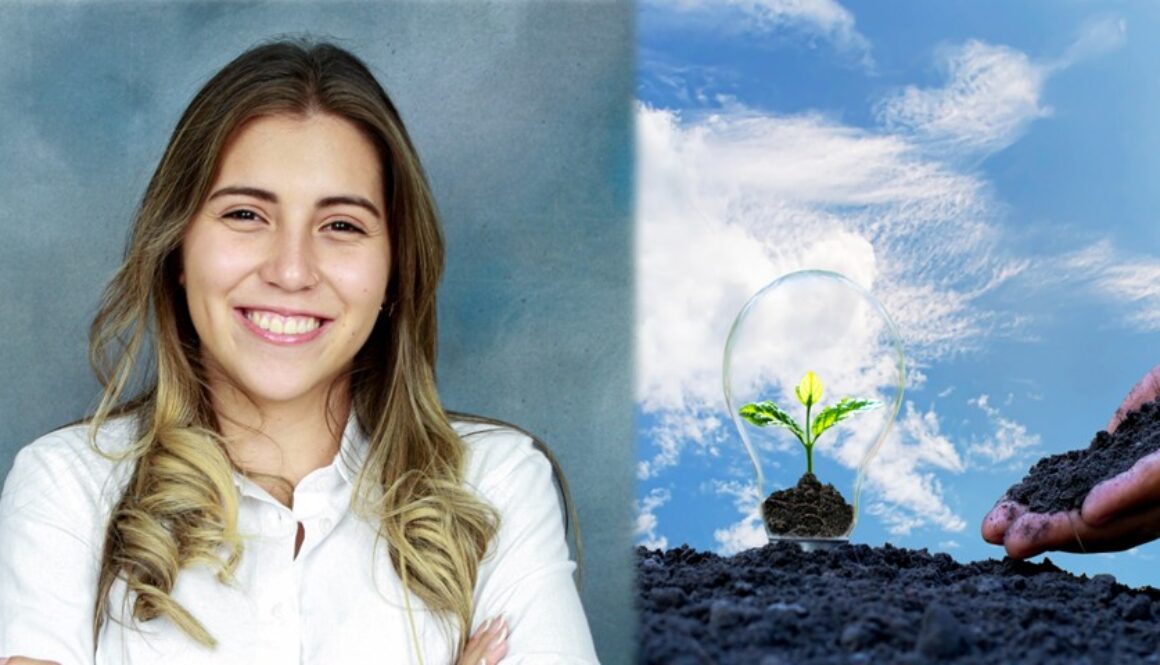
From Waste to Watts with Mariana Rojas
Can we turn farm waste into clean energy for rural communities? Listen to how Mariana Rojas, a Costa Rican engineering student, is transforming organic waste into practical climate solutions.
Introduction
In rural communities around the world, two challenges often coexist: limited access to reliable energy and an abundance of organic waste. What if one could solve the other?
That’s the question driving Mariana Rojas, a materials engineering student in Costa Rica, whose work focuses on converting agricultural waste into clean energy through biogas and green hydrogen. Her approach is simple, practical, and deeply rooted in local realities—offering a model that could scale far beyond her country.
Key Insights
Waste Is an Untapped Energy Resource
Rojas begins with a striking insight: waste is not just a problem—it’s a missed opportunity.
On a typical farm, animal manure is produced daily in large quantities. Left unmanaged, it releases methane, a greenhouse gas far more potent than carbon dioxide. Yet that same waste holds significant energy potential.
“Waste isn’t just a problem—it’s a powerful, untapped energy resource.” Mariana Rojas
“A single cow can generate enough waste to help cover a household’s daily energy needs,” Rojas explained during her Earth Talks presentation.
This creates a paradox: rural farms often struggle with energy access while simultaneously producing the raw materials needed to generate it.
From Manure to Biogas: A Circular System
At the heart of Rojas’s solution is a biodigester—a sealed system where microorganisms break down organic waste in the absence of oxygen, a process known as anaerobic digestion.
The result is biogas, primarily composed of methane, which can be used as fuel. At the same time, a nutrient-rich byproduct called digestate can be used as organic fertilizer.
This creates a circular system:
- Waste becomes energy
- Byproducts support agriculture
- Environmental pollution is reduced
Unlike solar or wind energy, this system is not weather-dependent. As long as farms produce waste, they produce energy.
Going Further: Producing Green Hydrogen
Rather than stopping at biogas, Rojas pushes the concept further.
After purification, methane from biogas can be converted into hydrogen through a process known as reforming. When the source is organic waste, the result is considered green hydrogen—a cleaner alternative to fossil fuel-derived hydrogen.
Key Takeaways
- Organic waste can be transformed into reliable, renewable energy for rural communities
- Biodigesters convert manure into biogas while reducing harmful methane emissions
- Green hydrogen adds value by expanding energy uses beyond direct fuel
- Small-scale systems empower farms with local, decentralized energy independence
- Collaboration is essential to scale solutions across regions and countries

This step increases the versatility of the system. Hydrogen can be used for:
- Electricity generation
- Industrial applications
- Future clean fuel systems
By adding this layer, the project transforms a basic waste solution into a forward-looking energy platform.
Designed for Small Farms, Not Mega-Industry
A key strength of Rojas’s approach is its scale.
Rather than targeting massive industrial farms, the system is designed for small and medium-sized operations—common in countries like Costa Rica. In pilot projects, even a handful of animals can produce enough waste to power parts of a home or farm operation.
This decentralized model offers several advantages:
- Lower infrastructure costs
- Reduced transmission losses
- Greater energy independence
- Increased resilience in remote areas
As Rojas noted, “This is about using local resources to solve local challenges.”
Real Benefits—and Real Limitations
The system is not without challenges.
Initial investment costs can be significant, especially for biodigesters and hydrogen conversion systems. Proper training is also essential to manage gas handling and system efficiency.
“We are wasting energy while creating pollution. This project changes that.” Mariana Rojas
There are also broader considerations:
- Larger-scale systems can face environmental and operational challenges
- Methane leakage must be carefully managed
- Waste treatment alone does not solve all impacts of livestock production
Still, these challenges are manageable with good design, education, and policy support. And at smaller scales, many risks are reduced.
Practical Takeaways & Implications
Rojas’s work offers a compelling blueprint for sustainable development—particularly in rural and underserved regions.
What makes this model powerful is its integration:
- It reduces greenhouse gas emissions by capturing methane
- It provides decentralized, reliable energy
- It lowers costs for farmers
- It creates additional value through fertilizer production
For communities without grid access, this can be transformative. In Costa Rica alone, thousands of households still lack reliable electricity despite the country’s strong renewable energy profile.
“Local resources can solve local challenges—and transform entire communities.” Mariana Rojas
Scaling this solution will require collaboration:
- Universities for research and innovation
- Governments for policy and funding support
- NGOs and networks (like Rotary) for community implementation
The model is also adaptable beyond Costa Rica—to agricultural regions across Latin America, Africa, and Asia.
Ultimately, this is not just about energy. It’s about empowerment—giving communities the tools to turn everyday waste into opportunity.
About This Earth Talk
Speaker: Mariana Rojas
Materials Engineering student at the Technological Institute of Costa Rica, focused on biomaterials, clean energy, and rural innovation. She also mentors young women in STEM.
Date Presented: 19 March 2026
🎥 Watch on YouTube
🎧 Listen as a Podcast
📖 Read the Blog
🌱 Learn more / Project links: [Link]